Match the protection to the task
The best protective gear depends on what could reach your eyes or hands during a particular step. Before starting, ask whether the task could send fragments into the air, splash liquid, create heat, puncture skin or bring a blade close to your fingers. A single project may call for different protection at different stages: cutting reclaimed wood is not the same as painting its finished surface.
Set up the work area before putting on gear. Secure materials so they cannot slip, keep blades sharp enough to cut without excessive force, and move cords and clutter out of the way. Protection adds a useful barrier, but it cannot make an unstable workpiece or an unsafe cutting technique harmless. Follow the instructions supplied with tools, adhesives and finishes, especially when they specify protective equipment.
Choose safety glasses or goggles for eye hazards
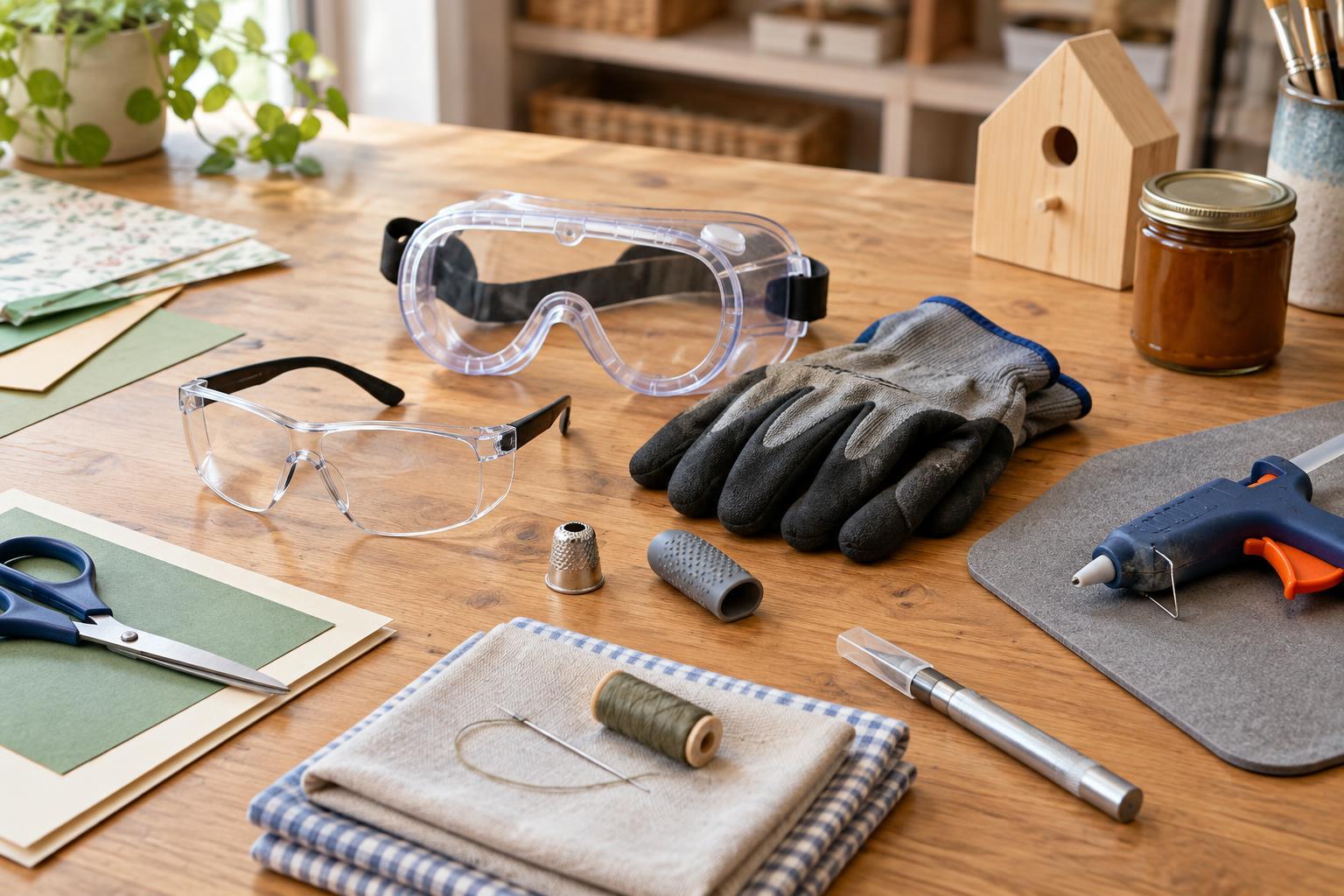
Ordinary prescription glasses and sunglasses are not substitutes for protective eyewear. For tasks that may throw small pieces—such as clipping wire, drilling a decorative object or sanding an upcycled item—choose safety glasses intended to protect against impact. Look for a comfortable fit that covers the front and sides of your eyes. If you wear prescription glasses, choose protective eyewear designed to fit over them or use suitable prescription safety glasses.
Goggles offer a closer seal than open-sided safety glasses and may be more suitable when fine dust or splashes could reach your eyes from several directions. Select goggles appropriate to the specific hazard and check that they sit securely without gaps. A face shield can provide additional coverage for the face during some messy tasks, but it should not replace the eye protection needed underneath.
Wear eye protection while the hazard is present, including during cleanup if brushing or handling debris could send it airborne. Replace lenses that are cracked or so scratched that they obscure your view. Poor visibility can make precise work harder and may tempt you to remove the protection at the wrong moment.
Protect hands without losing control
Gloves should suit both the hazard and the level of dexterity the task requires. A snug pair intended for handling rough materials can help reduce scrapes when sorting clean scrap wood or moving an unfinished decorative object. Cut-resistant gloves may add protection for some hand-cutting tasks, but they are not cut-proof and should never be used as a reason to cut toward your hand. Keep the work on a stable surface and position fingers away from the blade’s path.
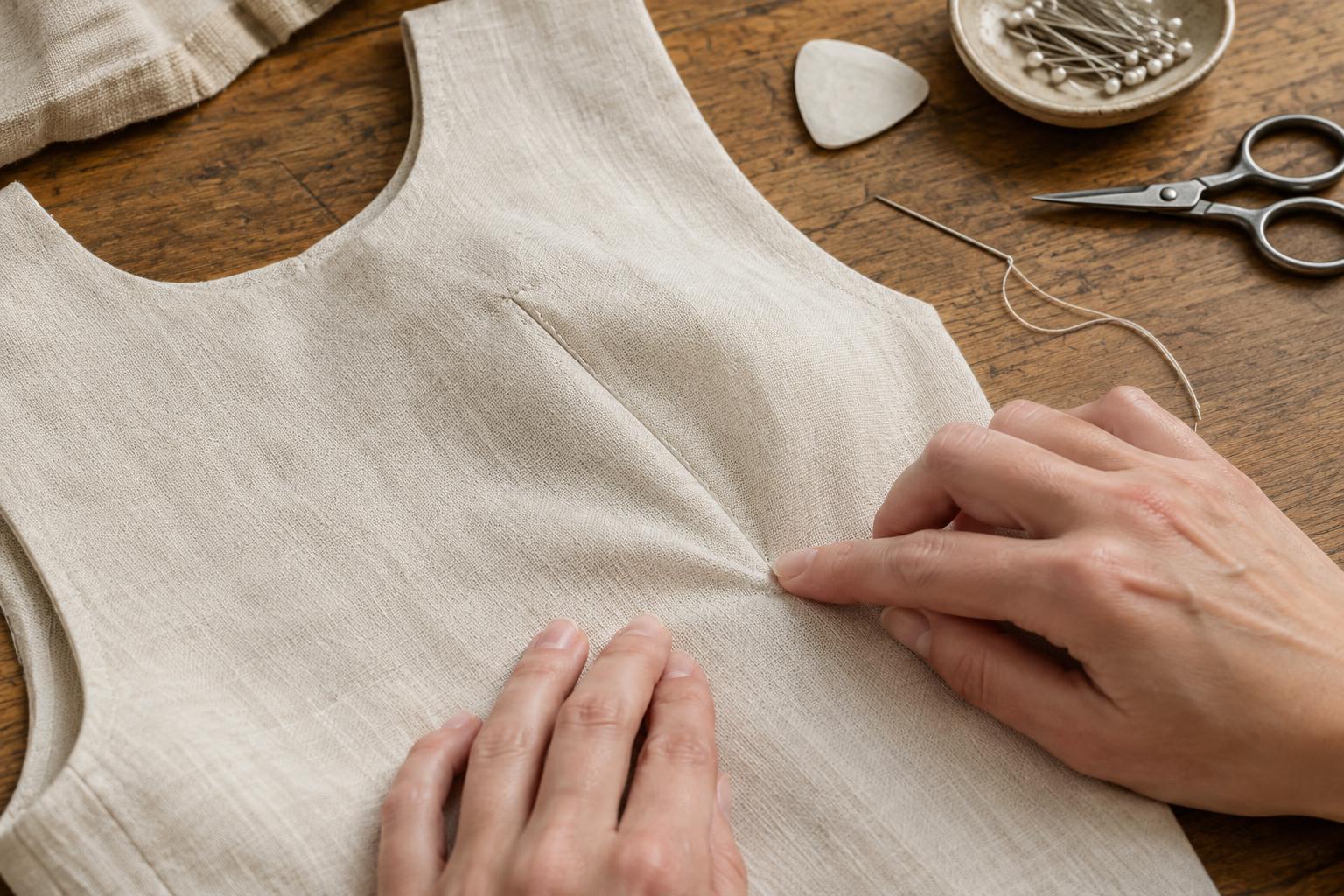
For sewing, a thimble may be more useful than a full glove when pushing a hand needle through thick fabric. Choose one that fits securely and lets you feel the needle’s position. When using a rotary cutter, keep its guard engaged whenever it is not cutting, use an appropriate mat and ruler, and keep your supporting hand clear of the cutting edge.
Do not assume gloves are always safer. Loose gloves can catch on moving parts, so check the tool instructions before wearing them with a drill or other powered equipment. Gloves that are bulky or slippery can also reduce control of small tools. If you cannot grip and guide the tool reliably, pause and choose a safer setup rather than relying on the glove.
Account for heat, adhesives and finishes
Hot glue can burn skin even during a small paper or fabric project. Use a stand or heat-safe resting place for the glue gun, avoid touching fresh glue, and allow pieces to cool before pressing them firmly together. If the work requires handling warm materials, choose protection intended for heat; thin disposable gloves are not heat protection. A small tool or clamp may let you hold a piece more safely than your fingers.
Adhesives, paints and finishes vary widely. Read each product label before use and follow its instructions for skin and eye protection. If gloves are recommended, check that their material is suitable for that product; no disposable glove works for every substance. Replace a glove that tears or becomes contaminated inside, and wash your hands after the task. Protective eyewear helps with accidental splashes, but it does not replace careful pouring, a protected work surface or adequate ventilation.
Make protection easy to use consistently
Try on eye and hand protection before beginning a project. Glasses that slide down your nose, goggles that fog badly or gloves that bunch at the fingertips can interfere with careful work. Adjust the fit or choose another suitable option rather than working around the problem. For shared craft spaces, provide sizes that fit each user; children’s protection should fit them properly and be paired with close supervision.
Keep protective items clean and within reach of the tools they accompany. Store eyewear where lenses will not be scratched, let reusable gloves dry as directed, and inspect both before each use. This simple habit makes it easier to choose the right barrier at the right time—and to recognize when changing the task setup is more important than adding another layer of gear.