Start with the material, not the scissors
Scissors that glide through wrapping paper may snag on fabric, while a pair that cuts cotton neatly can struggle with thick cardboard. The difference is not simply sharpness. Blade length, shape and sturdiness all affect how easily you can control a cut. Before choosing a pair, consider what you are cutting, how thick it is and whether the project needs long straight lines or small, precise shapes.
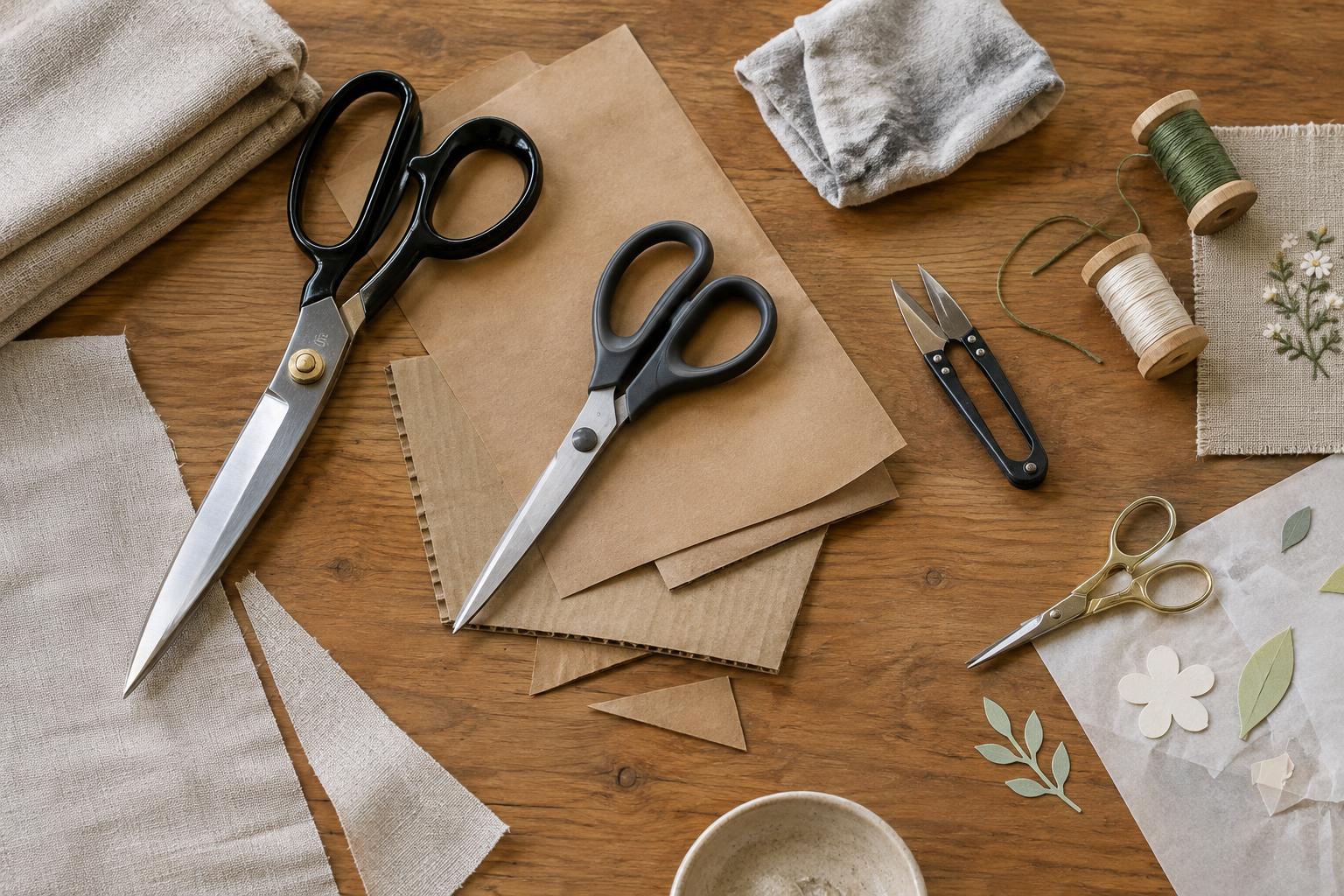
You do not need a separate pair for every craft. For many home projects, a useful starting set is one pair for paper and general use, one kept for fabric, and a small pair for thread or detail work. Keeping fabric scissors away from paper and card helps preserve the clean edge needed for sewing projects.
Paper, card and upcycled packaging
For ordinary paper, medium-sized scissors with straight blades are easy to handle. Longer blades help with straight cuts because you can move through more of the line in each stroke. Shorter blades offer more control around corners and curves. If you are cutting a printed shape, turn the paper as you work rather than twisting your cutting hand into an awkward position.
Cardstock and packaging need a sturdy pair that opens and closes comfortably through the material. Cut thick card in manageable sections instead of forcing the blades through a large sheet. For corrugated cardboard or rigid plastic packaging, scissors may bend the material or slip; a suitable craft knife and cutting mat may give a cleaner result. If using a knife, protect the work surface and cut away from your hands.
Adhesive labels and tape can leave residue on blades. A general-purpose pair is a better choice for sticky upcycling jobs than the scissors you reserve for fabric. If the blades begin to drag, check for residue before assuming they need sharpening.
Fabric and thread need cleaner edges
Dressmaking shears have long blades that help cut smooth lines through fabric laid flat on a table. Their angled handles allow the lower blade to stay close to the work surface, so the fabric is less likely to lift as you cut. For small sewing projects, choose a size you can open fully without straining your hand; the largest pair is not automatically the most useful.
Before cutting, smooth the fabric, align any layers and secure the pattern or cutting line so it does not shift. Use steady strokes and avoid chopping at the edge with the blade tips, which can leave a jagged outline. Test unfamiliar fabric on a scrap first: slippery, loosely woven or bulky materials may need extra care to keep the layers together.
Small embroidery scissors or thread snips are handy for trimming thread close to stitching and reaching tight spaces. They are not a substitute for fabric shears when cutting out pattern pieces. Conversely, repeatedly snipping tiny threads with large shears is cumbersome and makes it harder to see exactly where the blades will land.
Match blade shape and handle fit to the task
Fine-tip scissors are useful for small paper details, appliqué edges and other cuts where you need to see the line ahead of the blades. Decorative-edge scissors can add a repeated shape to paper borders, but they are less suited to thick card or fabric unless the product is made for that use. Check the intended material before trying specialty scissors on a new project.
Comfort matters as much as blade style. Your fingers should fit the handles without being squeezed, and the scissors should open and close smoothly. If you are left-handed, look for a pair designed for left-handed cutting rather than assuming any symmetrical-looking handle will work. Try a short cut on scrap material when possible: you should be able to see the cutting line and guide the blades without twisting your wrist.
Care for your scissors and avoid common mistakes
Wipe blades after cutting dusty or sticky materials, then dry them before storage. Keep scissors in a drawer, case or tool holder where the edges will not knock against other tools. If a pair feels loose, catches or starts folding material instead of cutting it, check for debris and blade damage. Sharpening methods vary by scissors design, so follow the maker’s guidance or use a suitable sharpening service rather than grinding the edges at random.
The most common mistake is using a good pair on whatever is nearby. Fabric shears used on cardboard may still look sharp but cut cloth less cleanly afterward. Other avoidable problems include forcing thick material between the blades, cutting with only the tips when a full stroke would be smoother, and holding the work in the air when it could rest on a table. A few well-chosen, clearly separated pairs will make everyday crafting easier than a large collection used interchangeably.