Choose stems that work together
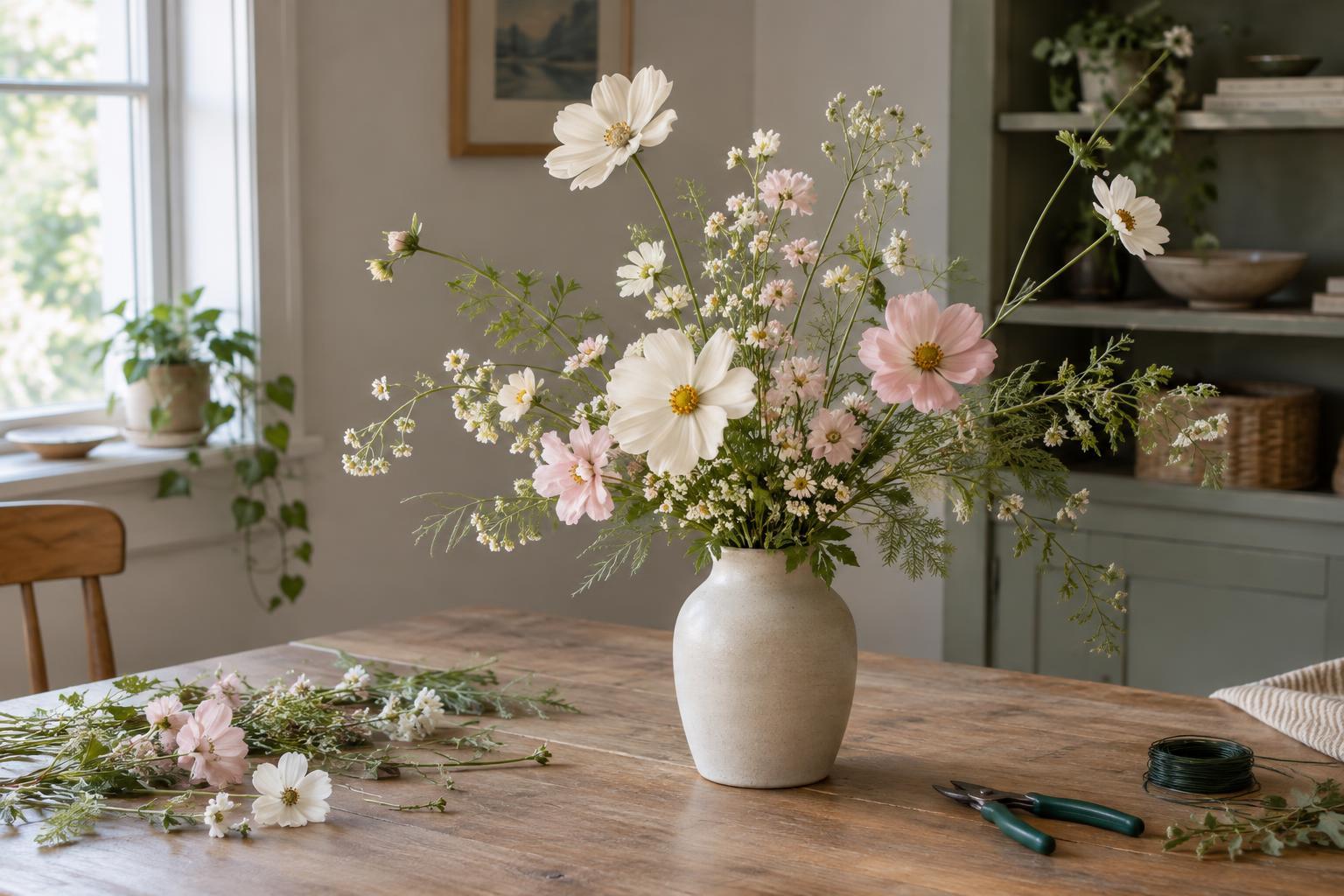
Start with a small selection rather than a large bunch of identical flowers. Choose one or two types of focal bloom, a few smaller flowers or buds, and some foliage. A limited color palette helps the arrangement feel connected, while slight differences in shape and size keep it from looking too uniform. Stems with flexible branches are especially useful because you can change their direction without adding more flowers.
Look at each stem closely before buying or arranging it. Visible plastic seams, rigid leaves, and flowers that are all exactly the same shape can be hard to disguise. You do not need perfect imitations, but choose stems whose textures look pleasing at the distance from which the vase will usually be seen. If you already have a mixed collection, set aside the least convincing pieces and use the rest sparingly.
Match the vase to the arrangement
The vase helps determine how many stems you need and how they will sit. A narrow opening can hold a loose arrangement in place with just a few stems. A wide opening gives you more room to work but may let stems slide outward, so you may need a support inside the vase. Check the arrangement from the position where it will be displayed: a tall vase on a low table creates a different impression from the same vase on a shelf.
For a clear vase, consider what will be visible below the flowers. Bare wire stems can distract from the display. An opaque vase hides them and is often the simplest choice. If you prefer clear glass, choose stems with convincing lower portions or use a suitable vase filler to conceal the mechanics. Make sure any filler is clean and stable before adding flowers.
Prepare the stems before placing them
Remove packaging and gently spread out compressed leaves and petals. Turn each stem slowly to find its most attractive side. Faux flowers often arrive with leaves pressed flat against the stem; bending them outward gives the arrangement more depth. Make small adjustments rather than forcing a sharp bend at one point, which can expose wire or damage the covering.
Test the height of each stem in the vase before cutting anything. A range of heights usually looks more relaxed than flowers ending at one level. If stems are too long, bend the lower ends inside an opaque vase where possible. For stems that need trimming, use cutters suited to floral wire and protect the work surface. Ordinary scissors may struggle with a wire core. Keep any offcuts away from children and pets.
Build a loose, balanced shape
Place a few foliage stems first to establish the width and height of the arrangement. Let some leaves lean beyond the vase rim rather than pointing every stem straight up. Next, add the focal flowers at different heights and angles. Rotate the vase as you work so that flowers do not all face the same direction. If the display will stand against a wall, give most of your attention to the visible front and sides.
Fill remaining gaps with smaller blooms or buds, but leave pockets of space between them. In a natural-looking arrangement, each flower does not need an unobstructed view. A leaf can overlap a bloom, and one stem can sit slightly behind another. Aim for an uneven outline rather than a perfect dome. Step back occasionally: it is easier to spot a crowded patch or an isolated flower from a short distance.
If the stems keep shifting, secure them inside the vase with a reusable floral grid or another support suited to the vase. Place the support where it will not show. Adjust the stems afterward so the structure holds the composition without making every flower stand at the same angle.
Make final adjustments and care for the display
When the arrangement is nearly finished, look for repeated patterns. Three identical flowers lined up at equal heights can make even good-quality stems look artificial. Shift one lower, turn another slightly away, or move a leaf across part of a bloom. Check that the vase feels visually steady: a wide sweep of flowers on one side may need a smaller stem on the other for balance.
Resist the urge to fill every opening. Too many stems can hide their shapes and make the display look stiff. Remove a piece if it is not helping the overall form. Dust leaves and petals gently as needed, following any care guidance for their materials. If a flower becomes permanently crushed or faded, replacing that stem can refresh the arrangement without rebuilding the whole vase.