Start with projects, not a shopping list
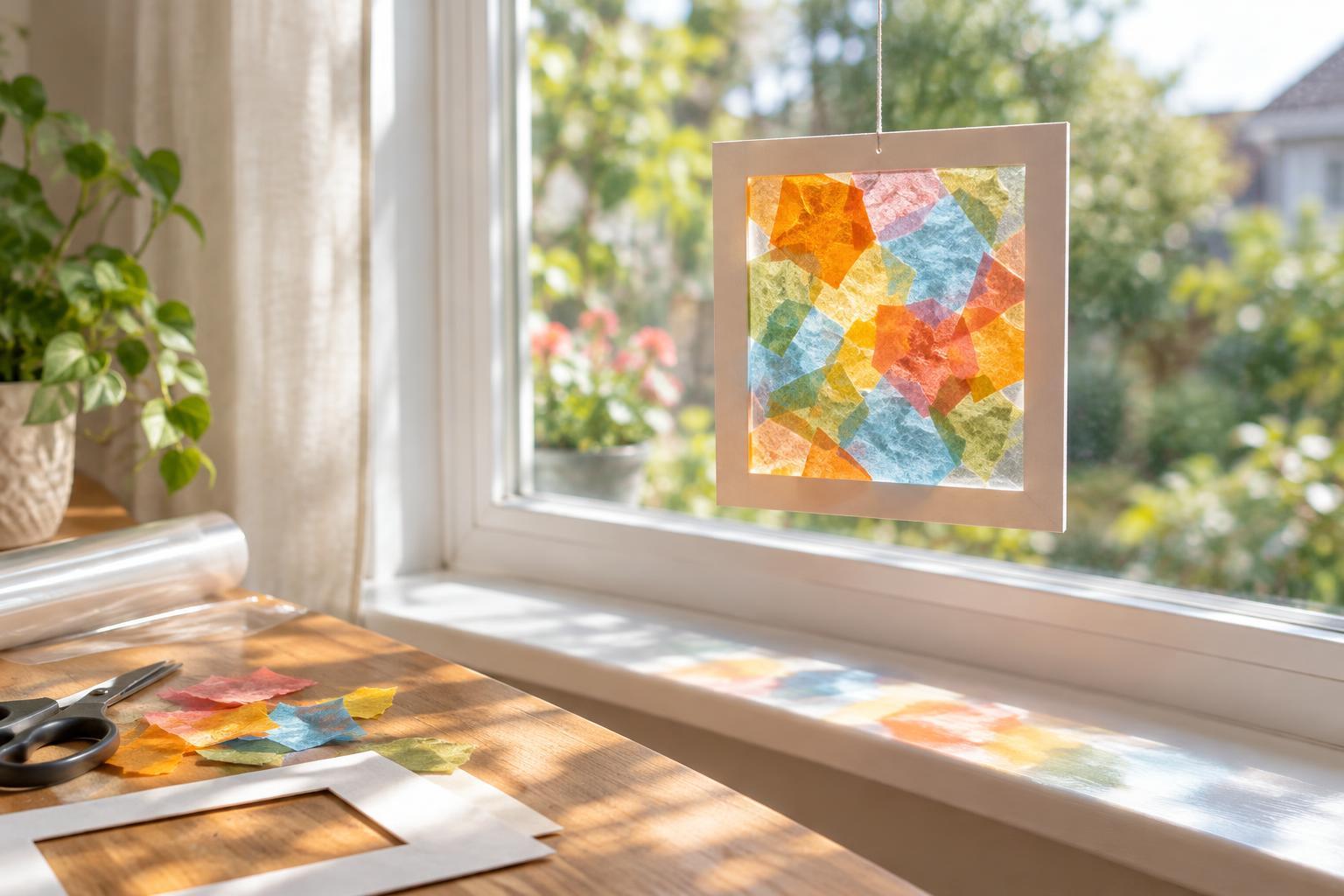
Before buying anything, choose two or three projects you would enjoy making soon. A greeting card, a hand-sewn pouch and a decorated jar call for different supplies, but their tool lists overlap. Write down the steps for each project: measure, mark, cut, join and finish. Then note which tools you already own that can do those jobs. This turns an appealing wall of craft supplies into a short list tied to work you will actually do.
Keep tools separate from materials on that list. A ruler can serve many projects; patterned paper or a particular thread colour may serve only one. Check your home for a usable ruler, pencil, clips and scissors before buying replacements. You do not need a matching set, and a tool made for another household task may be sufficient if it works safely and does not damage your materials.
Choose a small, versatile core
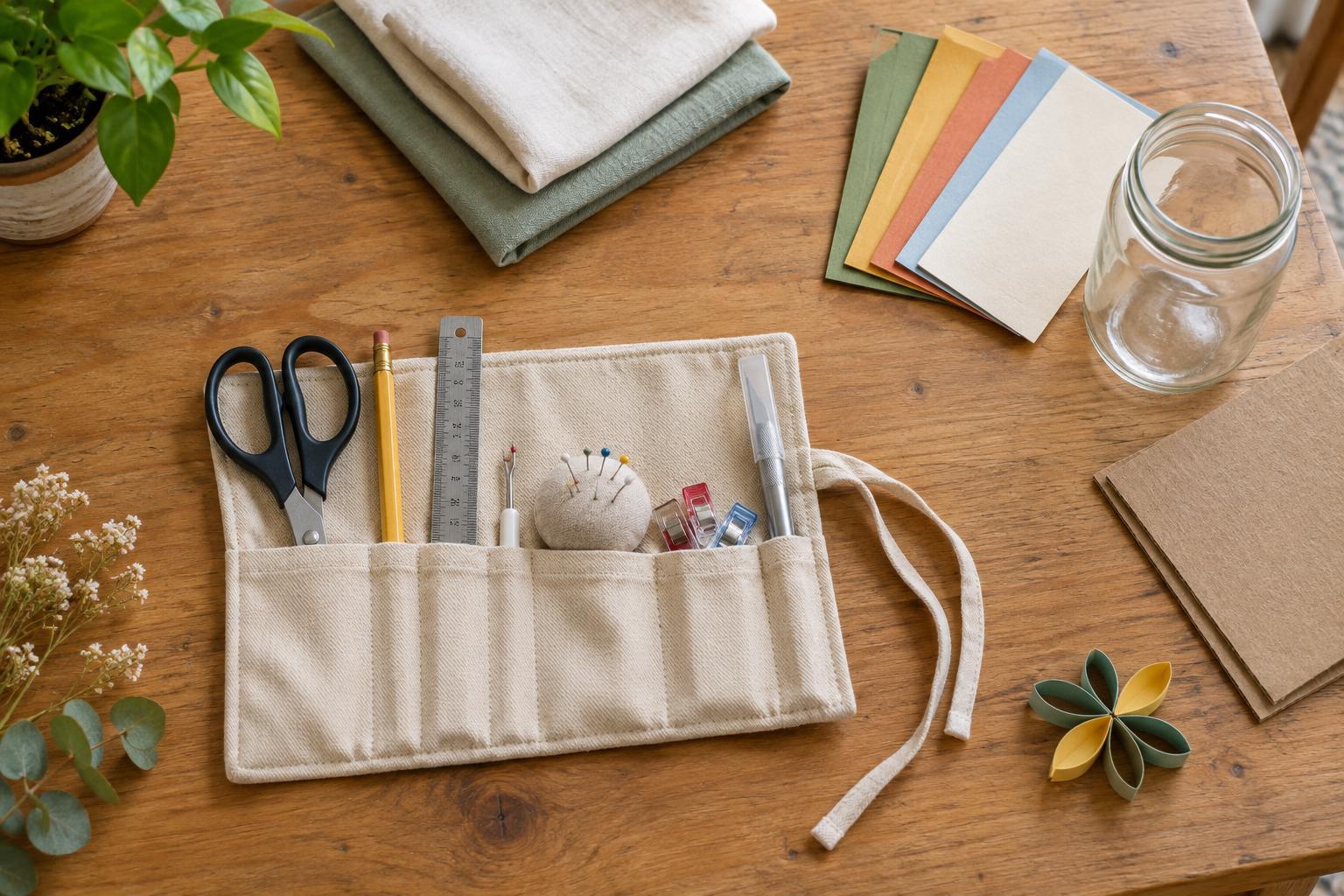
For many paper and decorative projects, a pencil, an eraser, a ruler with clear markings and a comfortable pair of scissors make a strong starting kit. A cutting mat is useful if you plan to cut regularly on a table, particularly with a craft knife. If you buy a knife, choose one you can grip securely, use it on a suitable cutting surface and put its cover on immediately after use. Scissors are often enough for a first project, so there is no need to buy both cutting options at once.
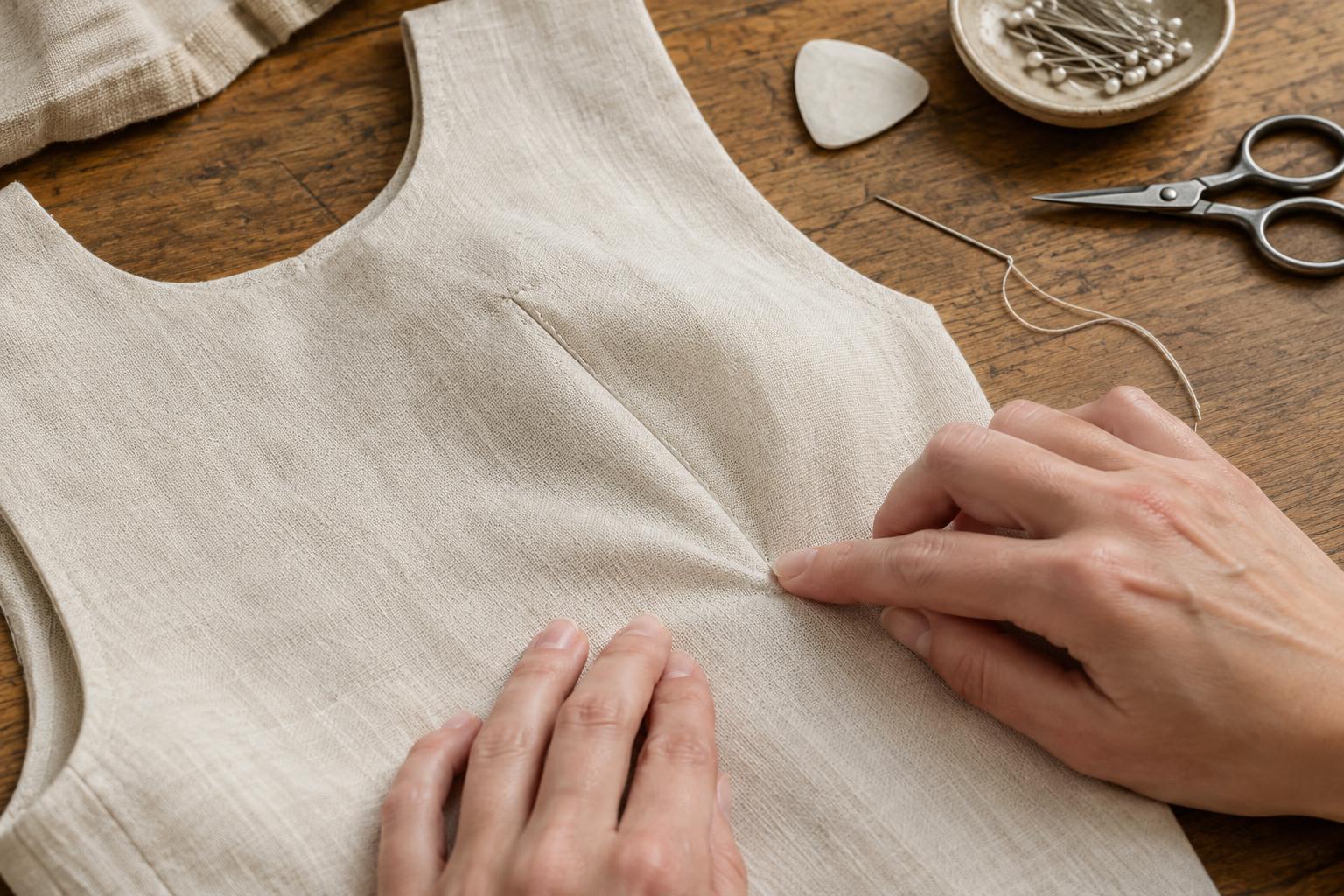
Add joining tools according to the materials you choose. A glue stick suits many light paper tasks, while a suitable craft glue may be more useful for small decorative pieces; check the label for compatible surfaces and drying instructions. For occasional hand sewing, a few needles, pins or clips, and a seam ripper may be enough. Reserve one pair of sharp scissors for fabric if you sew regularly: cutting paper with them can make fabric cutting more difficult.
Wait until a project reveals the need
Specialised tools earn their place when you can name the task they will make easier. A rotary cutter might help if you repeatedly cut fabric shapes; a hole punch might be worthwhile if you make batches of tags. Neither is essential for trying one pouch or card. When a project calls for an unfamiliar tool, ask whether you can complete it with what you have, borrow the tool, or try a smaller version before purchasing.
Buying less does not mean struggling through every step. If scissors give you ragged cuts despite careful marking, or hand sewing takes more effort than you enjoy, a better tool may be worth considering. Look for a specific problem rather than assuming a larger toolkit will improve every project. When possible, test how a tool feels in your hand and check whether replacement blades, needles or other parts are easy to obtain.
Match tools to the material
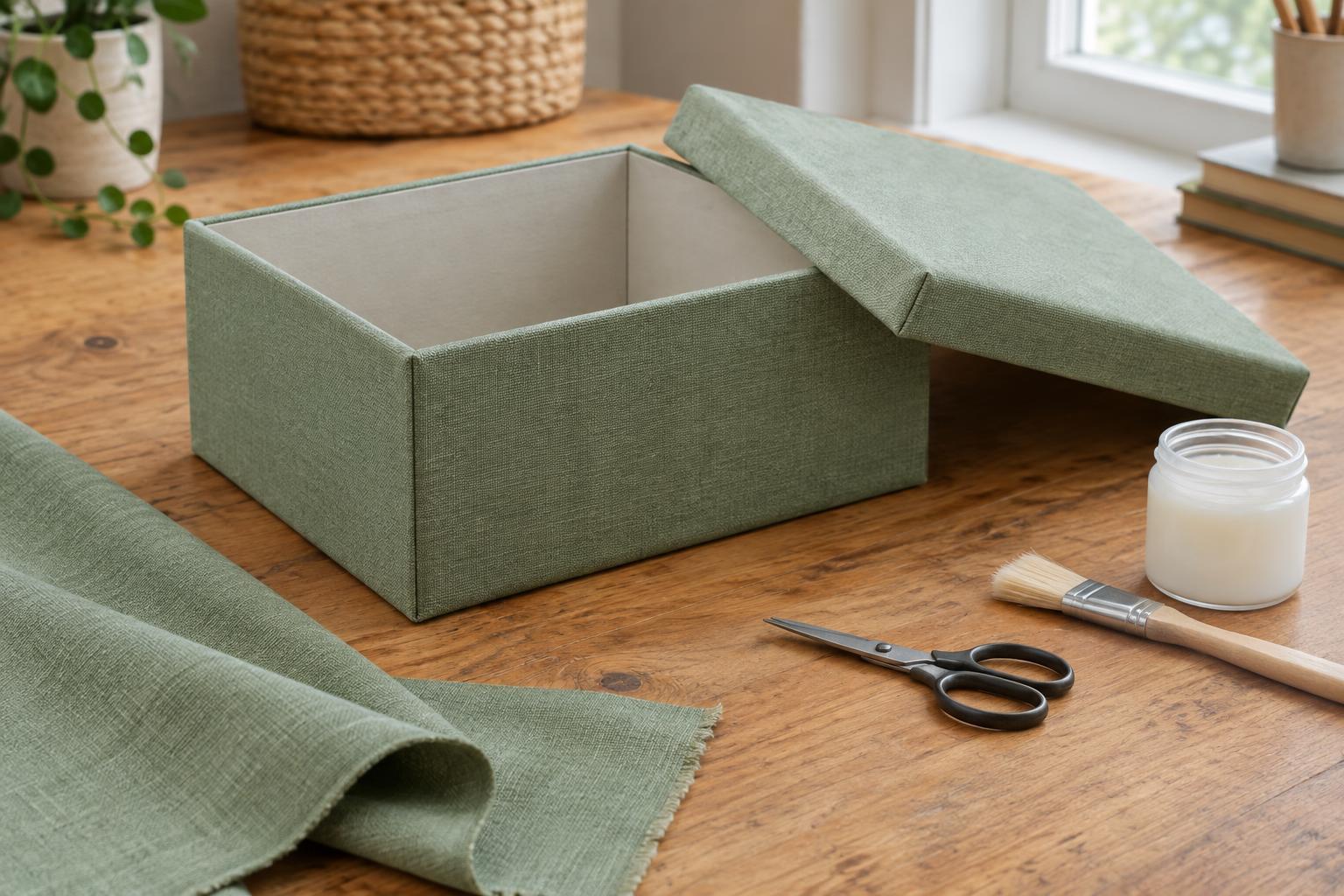
A tool can be useful in one craft and frustrating in another. Thin paper may tear under too much glue, while heavy card can be difficult to fold neatly without marking the fold first. Fabric that shifts as you cut may need pins or clips and a flat work surface. For upcycling, clean and dry the object before you decorate it, and test a joining method on an inconspicuous area if you are unsure how the surface will react.
Make a small test piece whenever the result is hard to predict. Try cutting a scrap to see whether your scissors leave a clean edge, or glue two offcuts and let them dry before assembling the finished object. These tests can reveal a missing tool, but they can also show that your existing kit works well enough. Keep sharp blades and needles accounted for, especially when you clear a shared work area.
Keep the kit usable and let it grow slowly
Store everyday tools together in a box, drawer or portable container, with sharp items covered or secured. Give small items such as needles and spare blades their own closed containers. Wipe glue from tool tips before it hardens, and return scissors and rulers to the same place after each session. Simple storage makes it easier to see what you own and less likely that you will buy a duplicate because a tool has disappeared.
After each project, note what worked and what slowed you down. If you repeatedly reach for the same improvised solution, it may be time for a dedicated tool. If an item sits untouched through several projects, you may not need anything similar yet. A basic toolkit is not a fixed checklist: it is a small collection that supports the crafts you make now and changes as your interests develop.