Choose a design that supports the books
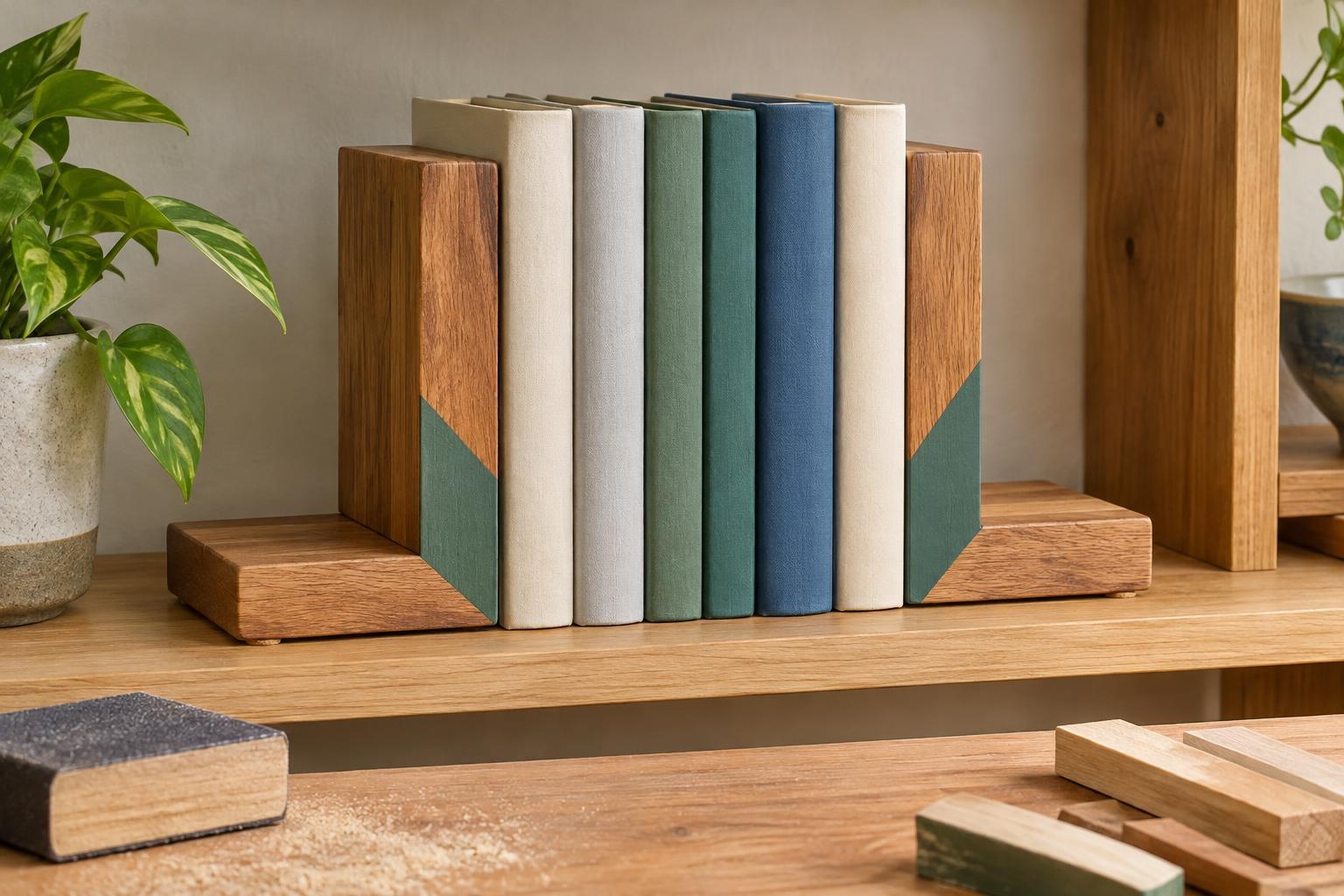
A useful bookend needs more than an attractive upright. An L-shaped design gives each bookend a flat base that slides beneath the books. The books’ weight helps hold that base down while the upright keeps the row in place. Make two matching bookends so you can support both ends of a row, or use one against a fixed shelf side.
For each bookend, start with two rectangular wood pieces: a base roughly 18–20 cm deep and 12–15 cm wide, and an upright roughly the same width and 18–22 cm tall. Wood around 18–25 mm thick is a practical starting point for ordinary books. Plywood and straight, sound solid wood can both work. For larger or heavier books, favor a wider base and a thicker, rigid upright rather than relying on a tall, narrow shape.
You will also need wood glue, two suitable wood screws per bookend, sandpaper, and a finish of your choice. A saw, drill, pilot bit, countersink bit, clamps, and a square make assembly easier. Thin cork or rubber pads are optional if your shelf is slippery. If you are reusing wood, check for splits, loose knots, old nails, and warped surfaces before cutting.
Cut, check, and smooth the pieces
Mark both bases together and both uprights together so the pair comes out even. Cut the pieces with straight, square edges. Before fastening anything, stand each upright at the rear edge of its base to form an L. Check that it sits flat and that the two pieces meet without a noticeable gap. An uneven joint is difficult to correct with screws alone.
Sand the faces and edges, beginning with a coarser grit if the wood is rough and moving to a finer grit for a comfortable finish. Ease sharp corners slightly, particularly on the base where hands may reach for a book. Remove sanding dust before gluing or finishing. If you plan to paint a detailed pattern, it is often easier to mark it now, but leave the joining surfaces bare so the glue can contact wood.
Fasten the L-shaped joints
Set an upright on the rear edge of a base and mark its position. Apply a thin, even layer of wood glue where the pieces meet, then clamp them square. Turn the assembly over and mark two screw positions on the underside of the base, spaced apart across the upright’s width. Keep both marks centered within the thickness of the upright so the screws enter its edge rather than breaking through a face.
Drill pilot holes and countersink the openings so the screw heads sit below the base. Choose screws long enough to pass through the base and grip the upright securely, but not so long that they emerge from its top or sides. Drive them in carefully; overtightening can strip the wood or pull the joint out of square. Wipe away excess glue and leave the assembly clamped for the curing time given on the glue container.
Repeat for the second bookend. Glue alone may not provide a dependable joint when books push against the upright, so do not skip the screws. Before decorating, place a few books on each base and press gently against the upright. If a joint shifts, correct it before applying a finish.
Add decoration without reducing stability
Paint, stain, or leave the wood natural, according to the look you want. Simple color blocks, painted stripes, or a small stenciled motif add character without making the surface uneven. Protect surrounding surfaces while you work, follow the finish manufacturer’s directions, and let the coating dry fully before placing the bookends next to books. Avoid thick embellishments on the inner face of the upright, where they could catch or mark covers.
If the bookends slide, attach thin cork or rubber pads to the underside of each base. Use pads of equal thickness so the base still sits level. If you prefer felt to protect a delicate shelf, test the bookends with your books first: felt may make them easier to slide. Keep any pads clear of the countersunk screw heads so the base rests evenly.
Test the bookends on the shelf
Place the bases beneath the books, with the uprights at the outer ends of the row. The bases should lie flat and extend far enough under the books to carry some of their weight. Adjust the row so it is supported without being packed tightly between the uprights.
Check for rocking, sliding, or a joint that opens when you remove a book. If the bookends move, try a wider base, more grip underneath, or a less demanding group of books rather than adding decoration for weight. A stable fit and sound joints are what make these simple wooden bookends useful as well as decorative.