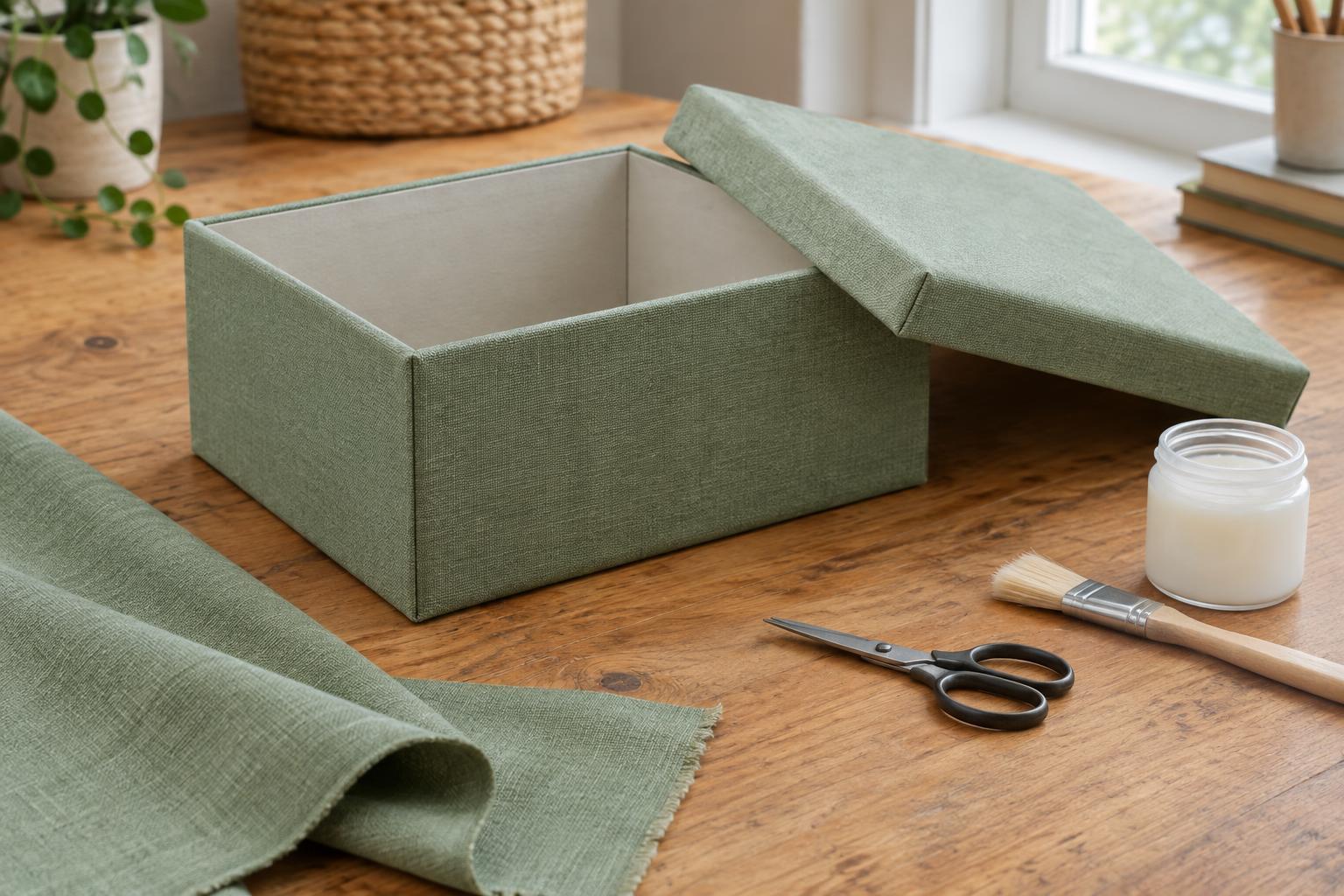
Start with a quick clean after each project
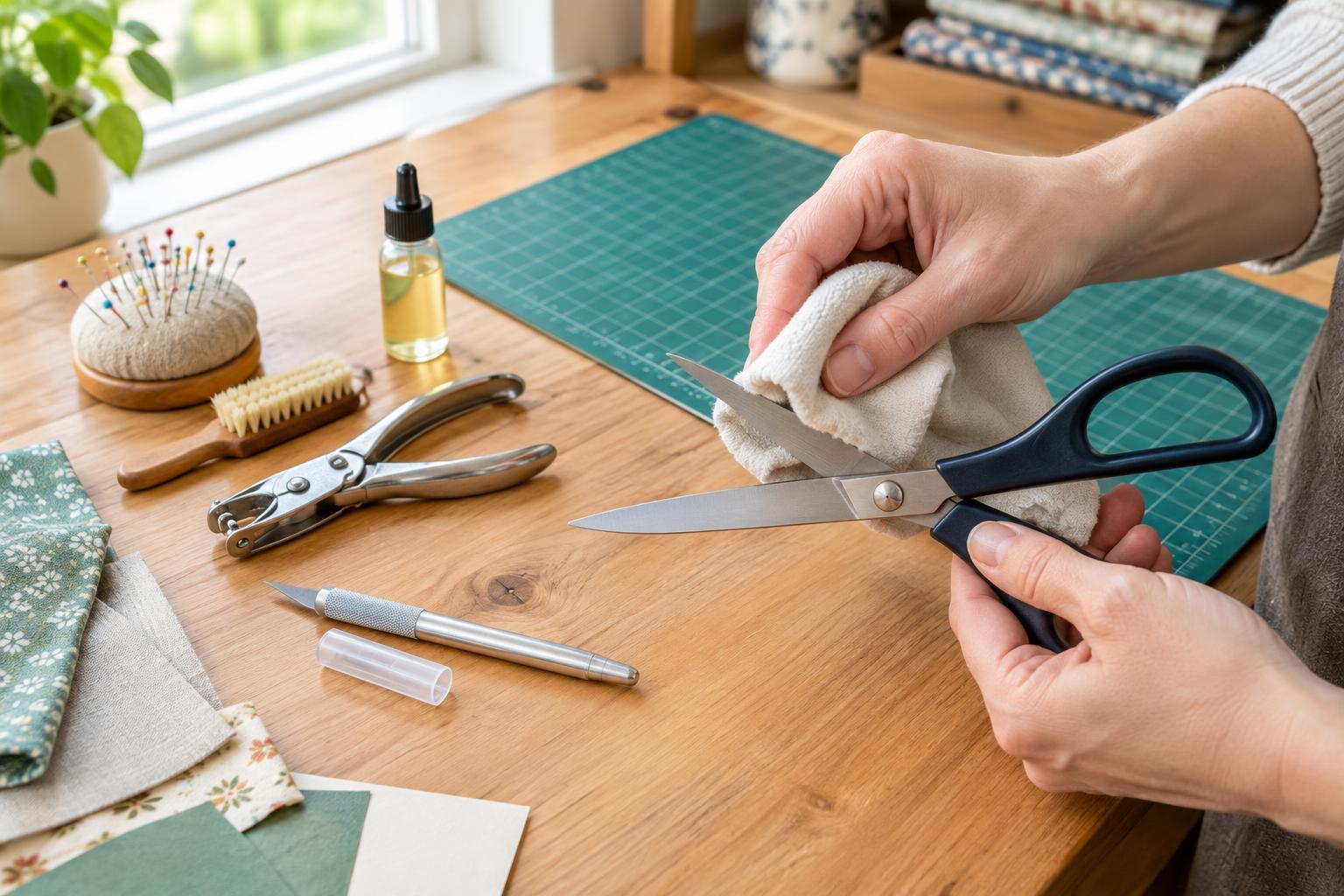
Good tool care begins before scraps and glue have time to build up. At the end of a project, brush paper dust and thread from scissors, punches and rotary cutters with a soft, dry brush or cloth. Wipe blades and metal handles with a clean cloth, then put tools away only when they are fully dry. This short routine is especially useful after cutting adhesive paper, painted materials or fabric treated with stiffener.
Remove sticky residue gently rather than scraping a blade with another metal tool. Start with a cloth lightly dampened with water and a little mild soap, keeping moisture out of hinges and enclosed mechanisms. For stubborn adhesive on a metal blade, a small amount of rubbing alcohol on a cloth may help, but test it away from coatings, painted handles and plastic parts first. Follow the tool maker’s care instructions if they differ, and wipe the tool dry afterward.
Protect scissors and blades from unnecessary wear
Use each cutting tool for the materials it is meant to handle. Fabric scissors often cut less cleanly after being used on paper, cardboard or tape, so keep a dedicated pair for fabric. A separate pair for sticky materials helps protect the scissors you use for precise paper cuts. Do not force thick materials through small craft scissors: excessive pressure can bend the blades or loosen their alignment.
A dull craft-knife or rotary-cutter blade may snag, require extra pressure or leave a ragged edge. Replace disposable blades according to the tool’s instructions instead of trying to sharpen them by hand. Cover exposed edges before changing a blade, work on a stable surface and place used blades in a rigid container intended for sharps disposal. Keep spare blades securely stored away from children and pets.
Scissors need a different approach. If cleaning the blades and checking the pivot do not restore a smooth cut, sharpening may help, but cutting foil or sandpaper is not a reliable substitute for proper sharpening. Quality scissors with damaged edges or poor alignment are best assessed by someone who sharpens scissors; inexpensive pairs may be more practical to replace.
Care for hinges, punches and needles
Scissor pivots should move smoothly without feeling loose. After cleaning and drying a metal pivot, a tiny drop of light tool oil can reduce stiffness if the maker permits it. Open and close the scissors a few times, then wipe away every trace of excess oil so it cannot stain paper or fabric. Avoid oiling handles, cutting surfaces or tools with mechanisms that the maker says should remain dry.
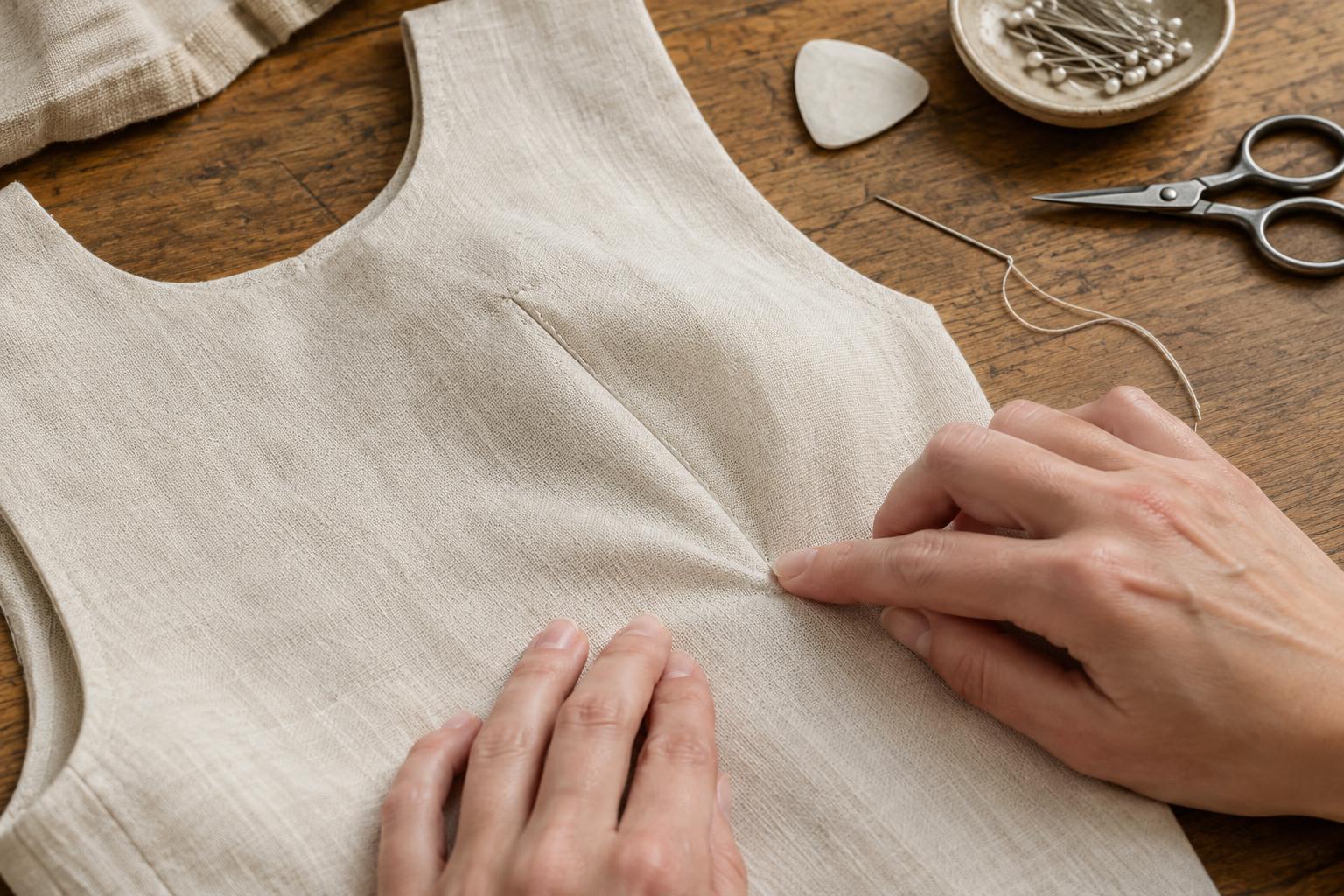
Paper punches can collect tiny scraps that prevent a clean cut. Empty their waste compartments, brush accessible openings and check for trapped pieces without putting fingers near the cutting parts. Do not pry apart a punch that is not designed to be disassembled. Sewing needles and pins also deserve inspection: discard any that are bent, rusty or rough enough to catch on fabric, and keep the rest dry in a closed case or pincushion.
Maintain the surfaces that support clean cuts
Even a sharp blade struggles on the wrong surface. Use a suitable cutting mat beneath craft knives and rotary cutters, and rotate or reposition your work so repeated cuts do not wear one narrow track. Clear loose fibers and paper bits from the mat after use. For a deeper clean, wash it with mild soap and cool or lukewarm water if its care instructions allow, then dry it flat. Hot water, direct heat and prolonged sun exposure can warp some mats.
Protect your tools during storage, too. Fit blade caps and scissor sheaths, retract craft-knife blades where possible, and avoid dropping loose tools into a crowded drawer. A dry box, tray or wall organizer makes edges easier to protect and tools easier to find. Store cutting tools so their blades do not knock against one another.
Make maintenance part of your setup
Before starting a project, make a test cut on a scrap of the same material. A clean cut tells you the tool and work surface are ready; snagging, uneven edges or unusual resistance tell you to pause and check for residue, damage or a worn blade. This is safer and wastes less material than pushing harder through a full project.
Keep a soft cloth, small brush, blade covers and a safe container for used blades near your workspace. Clean up after each session and do a closer inspection whenever a tool begins to behave differently. Consistent, gentle care does more to keep hand tools usable than an occasional aggressive clean.