Choose a sweater that can felt
A wool sweater with a stain, small hole, or worn cuffs can still provide plenty of coaster material. For this project, look for a label that says 100% wool and calls for hand washing. Wool fibers can grip one another during washing, turning a flexible knit into a denser fabric. Sweaters labeled “superwash” are treated to resist this change, while blends containing substantial amounts of acrylic or other synthetic fibers may not felt firmly. A loose, thick knit may need more washing than a fine knit, and results vary from sweater to sweater.
Check the garment before starting. Avoid areas that have been stretched thin, and inspect any decorations or seams you plan to use. Remove buttons, zippers, or other hard attachments if they could damage the sweater or washing machine. If you want matching coasters, choose a sweater with enough uninterrupted fabric on its front, back, or sleeves. A patterned sweater can work well, but remember that its pattern will shrink along with the knit.
Wash the sweater to make dense fabric
Put the sweater in a mesh laundry bag to help contain loose fibers. Wash it with a small amount of ordinary laundry detergent using a warm or hot cycle with agitation, following your machine’s instructions. Washing it with a few old towels can add movement, but avoid including anything delicate or likely to shed lint. This process is intended to shrink the sweater, so wash it separately from clothing you want to keep at its original size.
After washing, examine the fabric before drying it. The stitches should be harder to distinguish, and the sweater should feel thicker and less stretchy. If you can still see open spaces between stitches or pull the fabric easily in several directions, repeat the wash. Check it between cycles rather than assuming one wash will be enough. A dryer may encourage further shrinkage, but it can also make the fabric smaller than expected; use short intervals and inspect it often. Once the fabric is dense enough, let it dry completely before cutting. Clean any accumulated lint from the machine or dryer as you normally would.
Plan and cut the coasters
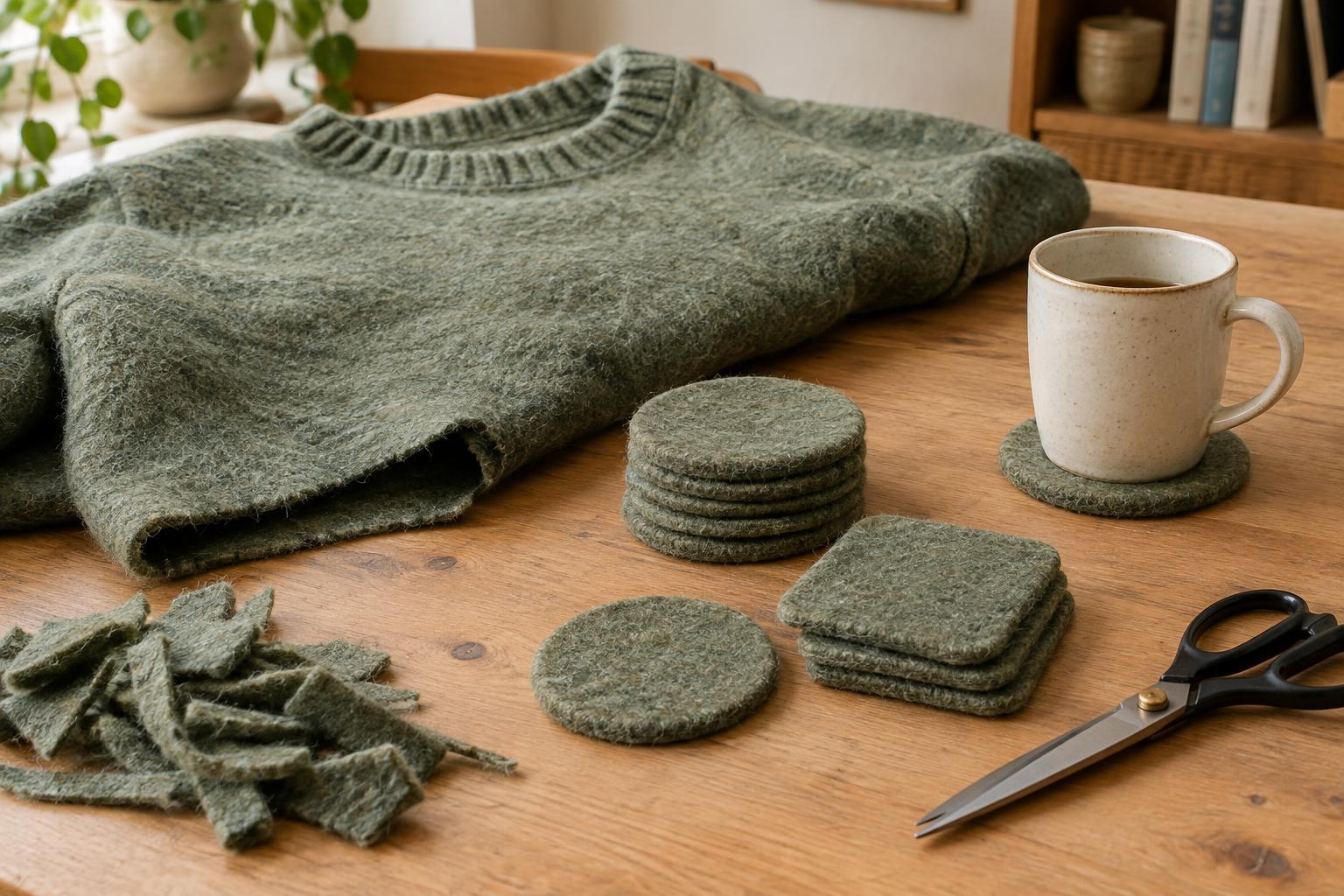
Lay the dry sweater flat without stretching it. Use a paper or cardboard template to plan coasters about 9 to 10 cm across, adjusting the size to suit your cups and mugs. Squares are easy to arrange on the fabric and cut with scissors; circles work too, though smooth curves take a little more care. Place the template away from seams, holes, and areas that remain thin. Trace around it with tailor’s chalk or a washable fabric marker, and check how many matching pieces you can fit before cutting.
Cut with sharp fabric scissors, taking long, steady snips so the edges stay even. A rotary cutter and cutting mat can be useful for straight-sided coasters. Do not stretch the felted fabric as you cut, or the shapes may end up uneven. Fully felted wool generally holds together well at a raw edge. If the cut edge begins to unravel or looks like an ordinary knitted edge, the fabric may need more felting before you make the rest of the set.
Finish, test, and care for your set
Simple coasters need no sewn hem. If you want a decorative finish, sew a blanket stitch around each edge with embroidery thread, keeping the stitches loose enough that they do not pull the coaster out of shape. You can also trim corners into gentle curves to reduce points that may bend upward. Set each finished coaster on a level table and place an empty mug on it. If it rocks, trim any uneven edge or choose a flatter part of the sweater for the next piece.
Wool coasters can absorb small drips, but they are not waterproof. Wipe up spills promptly and let damp coasters air-dry flat before storing them. Hand washing is a sensible way to clean them without encouraging more shrinkage: use cool water, handle them gently, press out excess water with a towel, and lay them flat to dry. Keep these coasters for cups and glasses rather than using them as protection beneath hot cookware. With a dense sweater and careful cutting, even a garment that can no longer be worn can become a useful everyday set.