What paper grain means for a fold
Paper grain is the direction in which most of the fibers align as a sheet is made. You may not see it, but you can often feel its effect: paper usually bends more readily when the fold line runs parallel to the grain. Folding across the grain can take more pressure and may leave a rougher edge.
This matters most when a project has a prominent fold, such as a greeting card, booklet cover, paper sleeve, or gift box. Grain is not the only factor in a good result. Thickness, surface coating, and the sharpness of your fold also matter. Still, checking grain before you cut can save an otherwise carefully made project.
Find the grain with a gentle bend test
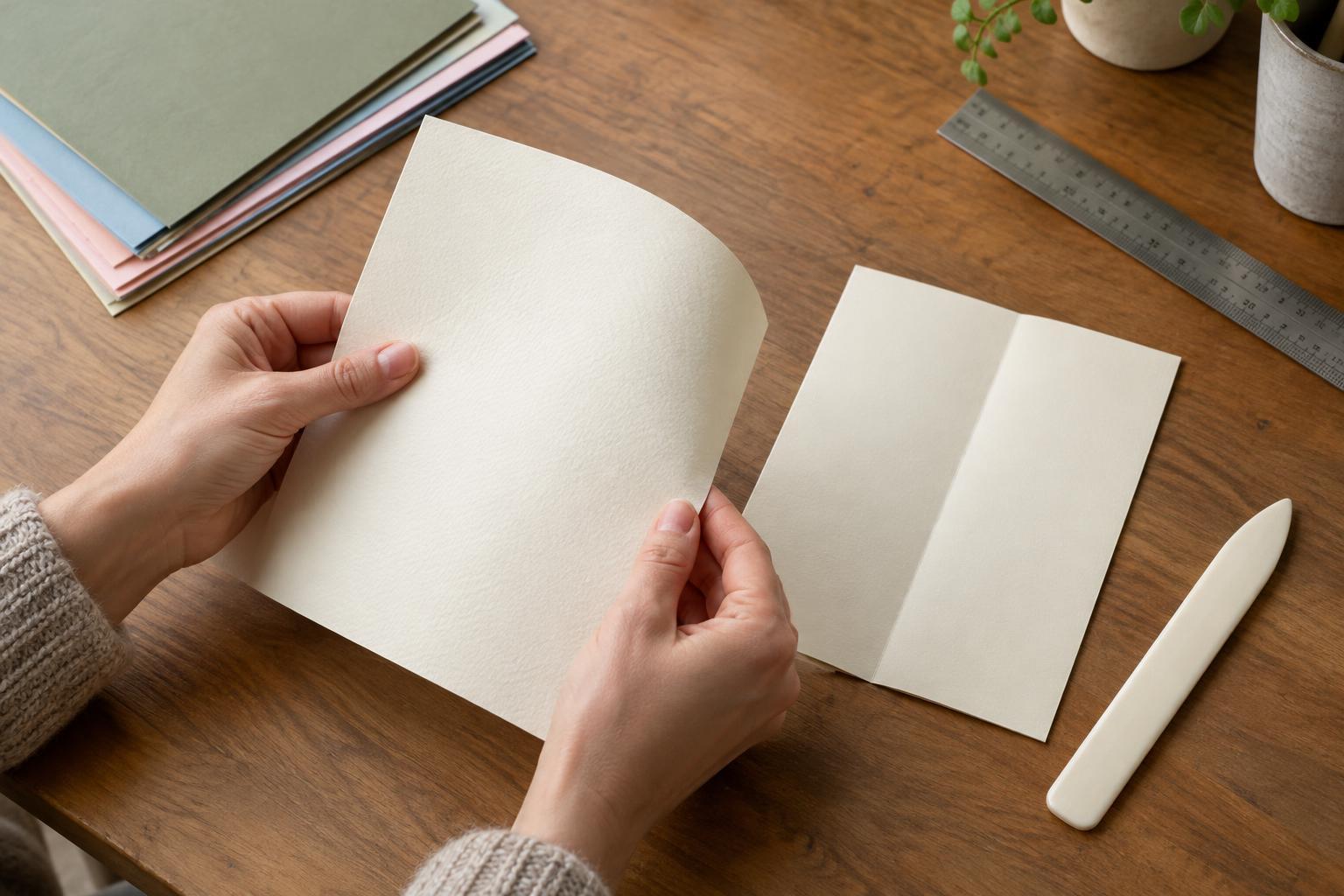
Take an uncut sheet and hold two opposite edges, letting the paper curve into a loose U without creasing it. Notice how much resistance you feel. Turn the sheet a quarter turn and curve it again using the other pair of edges. The direction that bends more easily gives you a clue: the line running along the bottom of that easier curve is generally parallel to the grain.
For example, if the sheet curves easily while the bottom of the U runs along its longer dimension, its grain likely runs lengthwise. Repeat the test if the difference is subtle, using the same light pressure each time. Thin paper may show only a small difference; thick cardstock is often easier to judge.
A small offcut can provide a second check. Make one test fold in each direction and compare the creases. The fold that closes with less resistance and looks smoother is usually parallel to the grain. Test on spare material rather than on the sheet you need for your finished piece, especially if the paper has a delicate or coated surface.
Plan cuts around the fold line
Before cutting, mark the grain direction lightly in pencil on the back of the sheet. Then sketch where the folds will go. For a card or booklet cover, try to place the main fold line parallel to your mark. It is the direction of the crease itself that matters, not the direction in which the card opens.
If you are cutting several pieces from one sheet, lay them out with the important folds in mind. Rotating a card blank may give you a cleaner fold but change how many blanks fit on the sheet. Make that choice before trimming; once a piece is cut to size, it may be too small to rotate into the direction you want.
Some projects, particularly boxes, need folds in both directions. You cannot align every crease with the grain on a single piece. Give priority to the fold that will be most visible or opened most often, then use a scoring tool to help the remaining folds form neatly.
Score and fold without damaging the surface
For a precise fold, first measure and mark its position. Place the sheet on a cutting mat or another firm, slightly forgiving surface. Hold a ruler steady and draw a blunt scoring tool along its edge with moderate, even pressure. A bone folder or an empty ballpoint pen can work; test the tool on a scrap to make sure it leaves an indentation rather than tearing the paper.
Fold slowly along the scored line, bringing the edges into alignment before pressing the crease flat. Run a bone folder or a clean fingertip along the fold to sharpen it. If a coated sheet shows a pale or cracked line, reduce the pressure and test which side of the sheet gives the better result when scored. Some surfaces will still show wear, particularly when folded across the grain.
Avoid trying to force a thick sheet into a sharp crease in one motion. Start with a gentle bend, check that the edges meet, and then flatten it. If you are making many identical pieces, keep a labeled test offcut nearby so you can check your grain marks and scoring pressure before working on the rest.
Troubleshoot an uneven fold
If a fold bows, resists closing, or looks ragged, first check whether it runs across the grain. A slightly misplaced score can also pull the paper away from the intended line, so measure from the same reference edge each time and keep the ruler from slipping. Uneven pressure may leave part of the crease weak and another part deeply marked.
When you cannot change the grain direction, a clean score and a slower fold are usually the most useful adjustments. For a highly visible project, making one full-size sample is worth the extra sheet: it shows how the paper behaves after cutting, scoring, and folding—not just during the bend test. Use what you learn to adjust the layout before making the final version.