Choose flowers and gather your supplies
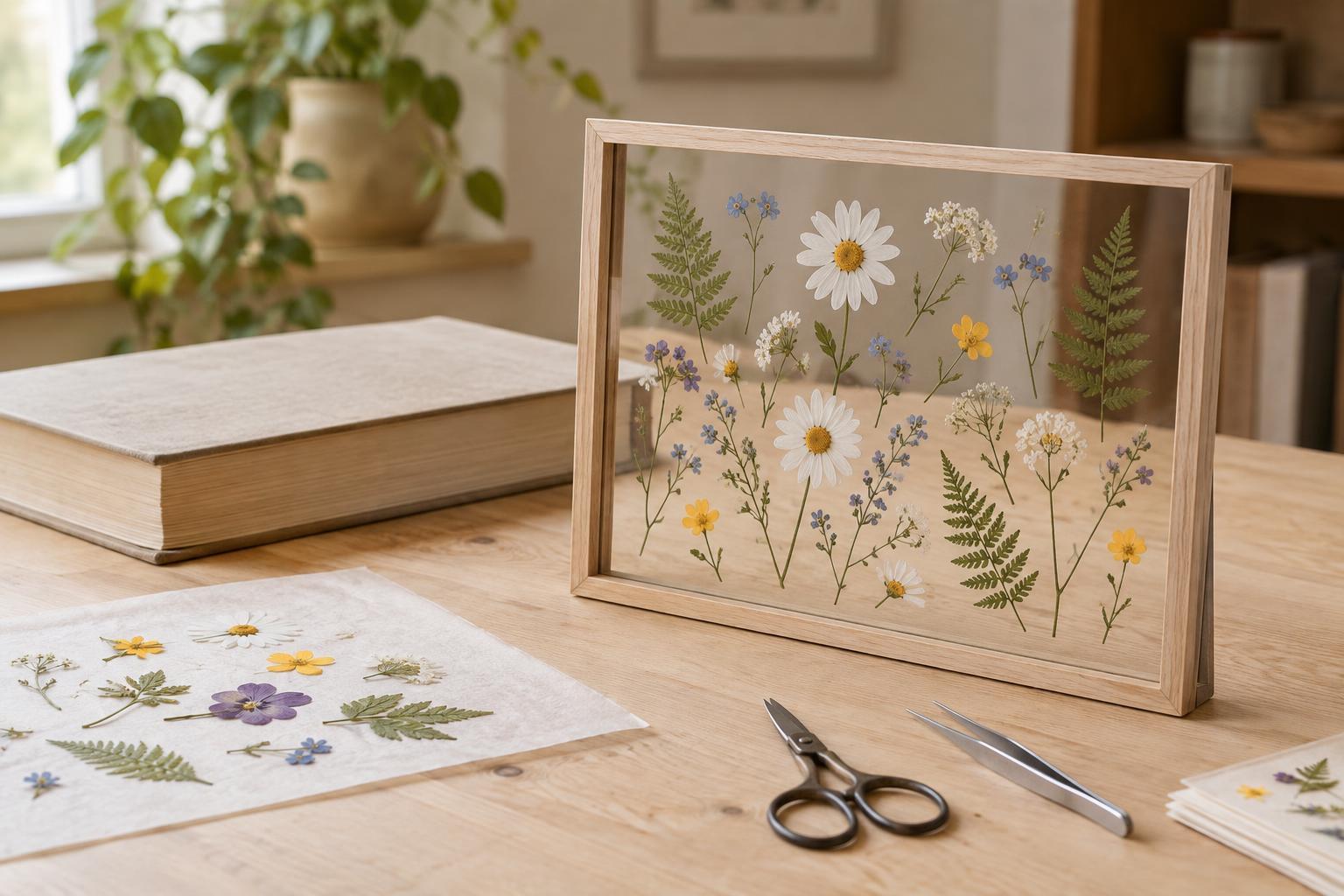
A floating frame holds pressed flowers between two clear panes, letting the wall show through around them. Its simple look makes the shape of each stem and petal important. Small, fairly flat flowers, individual petals, delicate leaves and thin sprigs are good starting choices. Thick flower heads and fleshy stems hold more moisture and can be harder to press evenly. If you are collecting outdoors, take only plants you can safely handle and have permission to pick.
You will need clean, dry flowers; absorbent, uncoated paper such as blotting or plain printer paper; a heavy book or flower press; and a floating frame with two panes. Keep spare paper nearby for changes during drying. For assembly, gather a soft cloth, a small brush or tweezers, and, if needed, a tiny amount of clear-drying adhesive suitable for the pane material. Check the frame’s instructions before using any adhesive, particularly if its panes are acrylic rather than glass.
Prepare and press the flowers
Press flowers as soon as practical after picking, while they still have their shape. Gently shake away loose dirt and brush off small debris. If a flower is wet, let surface water evaporate before pressing; pressing damp petals can encourage discoloration or mold. Remove bulky parts that will not flatten well, and decide whether you want a whole bloom, a side view, or separate petals. Arrange each piece as you want it to appear later, because folds and overlaps become harder to change once dry.
Place the specimens between two sheets of absorbent paper, leaving space so they do not touch. Put the paper inside a heavy book, with extra sheets protecting its pages, or into a flower press. Add even weight if using a book. Check after a day or two and replace any paper that feels damp; continue checking periodically. Drying time varies with the plant and your room, so judge by feel rather than the calendar. A finished piece should feel papery and dry, not cool, soft or flexible from retained moisture. Discard any specimen that develops visible mold.
Plan a balanced floating arrangement
Before opening the frame, test your layout on a clean sheet of paper cut to the size of the panes. Try one larger flower as a focal point, then place smaller stems or petals around it. Leave open space so the arrangement still looks light when the wall is visible behind it. Consider the direction of each stem: a slight change in angle can make a collection look natural without crowding the glass.
Take a photo of the layout before moving anything. Pressed petals are fragile, so lift them with tweezers or the tip of a soft brush instead of dragging them across a surface. If a piece curls or breaks, substitute another rather than forcing it flat. Make sure the frame has enough room to close without crushing thicker stems or leaving a gap between its parts.
Assemble the frame without trapping moisture
Work on a clean, dry surface. Open the frame and wipe both panes as directed by the manufacturer, then allow them to dry completely. Set one pane down and transfer your arrangement, using your layout photo as a guide. Check the view from the front before securing anything; some flowers look different when seen through the pane.
If the frame holds the flowers firmly when closed, you may not need adhesive. If pieces shift, test a tiny dot of suitable clear-drying adhesive on a spare pressed piece and an inconspicuous area first. Use as little as possible, applied behind a sturdier part such as a stem, and let it dry fully before closing the frame. Excess adhesive can spread, stain petals or remain visible through the glass. Carefully lower the second pane into place, close the frame according to its instructions, and check for stray fibers, fingerprints or displaced petals before hanging it. Handle glass by its edges and take care with any chipped panes.
Display and care for your finished piece
Hang the frame somewhere dry and away from strong direct sunlight. Pressed flowers can fade over time, and moisture trapped or introduced later can affect their appearance. A bedroom, hallway or living area is usually a better choice than a steamy bathroom. Use the frame’s intended hanging hardware and choose a secure fixing appropriate for the wall.
Dust the outside gently with a soft, dry cloth. If a flower slips, open the frame on a clear work surface rather than shaking it back into place. Your first arrangement need not be elaborate: a single well-pressed stem with plenty of space around it can make an effective display and gives you a useful starting point for more detailed projects.