Choose a box that fits the magazines
An empty cereal box can make a slim holder for magazines, patterns or thin notebooks. Before cutting, stand a few items inside it. They should fit without forcing the box outward, and the box should be tall enough to support them at the back. A narrow box is best for a small collection; a stack of heavy magazines may need a sturdier container.
Choose a box that is dry and not crushed. You will also need spare cardboard from another package, a ruler, pencil, scissors, craft glue or strong double-sided tape, and clips or clothespins. A craft knife and cutting mat can help with thick cardboard, but scissors are sufficient for most cereal boxes. Remove any loose inner bag, flatten the top flaps, and wipe away crumbs before you begin.
Cut the magazine-file shape
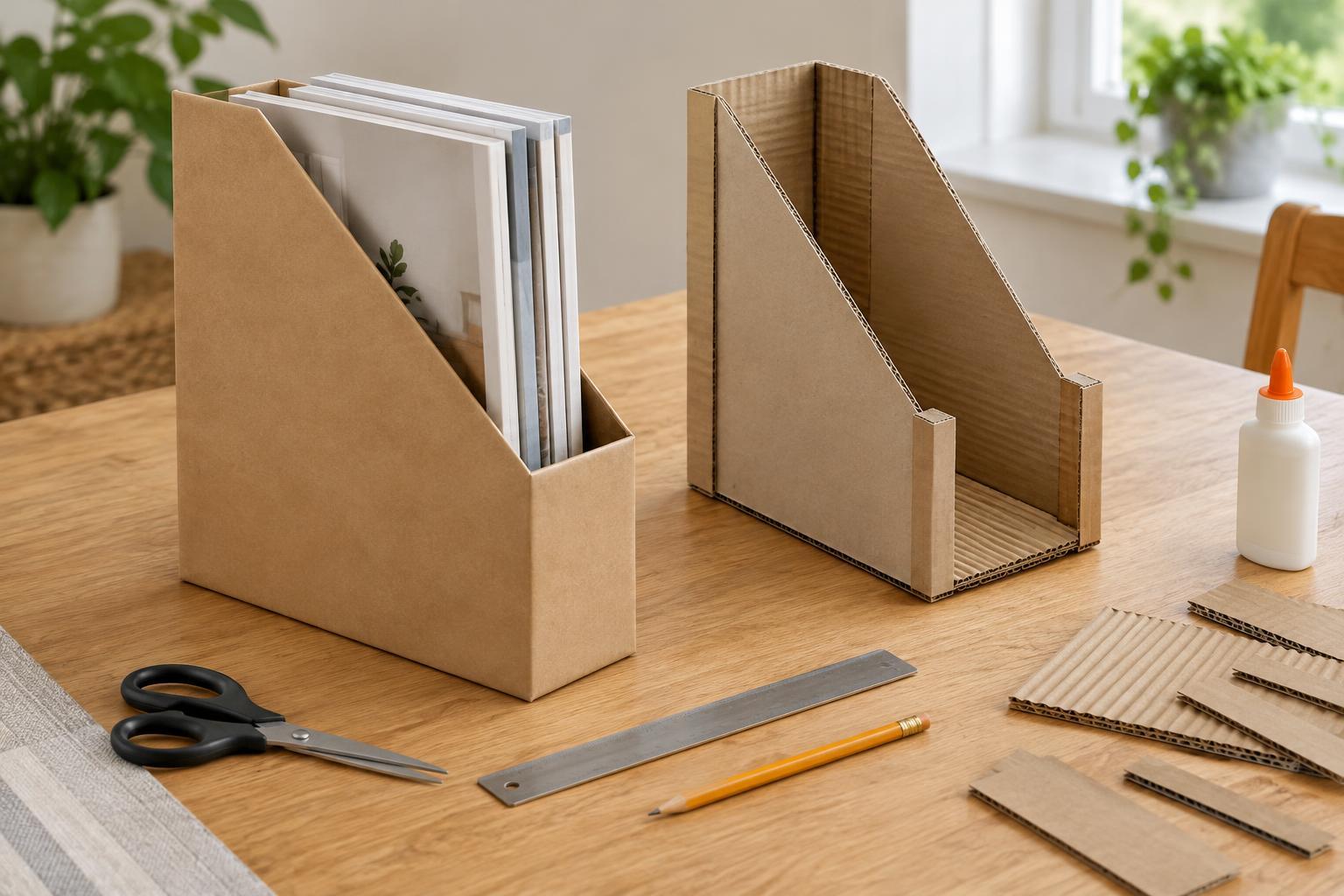
Stand the box upright with one narrow panel facing you. This panel will become the low front; the opposite narrow panel will be the tall back. On each broad side panel, mark a point near the top at the back edge and another point about one-third of the box height up the front edge. Join each pair of marks with a straight line. Check that the lines match on both sides before cutting.
Cut away the top flaps and the cardboard above your marked lines. Trim the front narrow panel down to its one-third-height mark, leaving the back narrow panel tall. Keep the bottom and all four lower corners intact: they provide much of the holder’s stability. Try a magazine in the cut box now. If its front edge falls forward, raise the front height slightly when you make your next holder; cardboard removed at this stage cannot be put back neatly.
Strengthen the base and walls
Cut a piece of spare cardboard to fit closely inside the bottom of the box. Glue it flat against the existing base, pressing into the corners without bending the walls. For an extra layer, cut a second piece with its cardboard grain running in the other direction if the material allows. Let the base dry under a small, evenly distributed weight that does not bow the box.
Next, trace each sloping side wall onto spare cardboard. Cut two liners slightly smaller than the traced shapes so they fit inside without pushing against the corners. Spread a thin, even layer of glue on each liner and press it against the inside of its matching wall. Clips can hold the upper edges while the glue dries. Use only enough glue to bond the layers: excess moisture can ripple thin cereal-box cardboard. If a side still flexes noticeably, add a narrower strip along its lower edge rather than another full, heavy liner.
Support the front and back edges
The short front panel takes pressure whenever you slide a magazine into the holder. Reinforce it with a cardboard strip fitted against its inside surface. If the cut edge feels flimsy, fold a strip of sturdy paper over the edge and glue it on both sides, or cover it with paper tape. Press firmly along the fold so it does not catch on magazine covers.
Check the tall back panel, especially its vertical glued seam. If it opens or bends easily, glue a cardboard strip inside over the seam, leaving the bottom corner clear so the holder sits flat. Allow all reinforced areas to dry fully before testing the box again. Adding more material is not always the answer: a square base and well-bonded corners do more for a holder than thick walls that pull it out of shape.
Finish, fill and maintain the holder
Once the structure is dry, cover the outside with wrapping paper, leftover wallpaper or a collage of paper scraps. Cut pieces to fit each panel, apply adhesive sparingly, and smooth from the center toward the edges to limit wrinkles. Fold a small margin of covering paper over exposed edges for a tidy finish, but keep the inside bottom free of bulky folds. Add a label to the front or back if you plan to sort magazines by subject.
Set the holder on a level shelf and fill it gradually, checking that its sides remain straight. If it leans, remove some contents and inspect the base and seams. Keep the finished box away from damp surfaces, which can soften both the original packaging and its reinforcing layers. The result works best as a lightweight organizer, with the strength to support everyday browsing rather than an overfilled stack.