Why cardstock cracks at a fold
When cardstock bends, the surface on the outside of the fold has to stretch. If that surface is stiff or brittle, it may split, leaving a pale line that is especially noticeable on dark, printed, or colored card. A score line gives the sheet a controlled place to bend, but it cannot make every material fold cleanly.
Thickness matters, but it is not the only factor. Coatings, printed layers, textured finishes, and a white inner core can all affect the result. A white line on colored card may be exposed core rather than damage you can smooth away. Before making a card, box, or paper decoration, test one fold on a small offcut of the same sheet.
Check the grain before you mark the sheet
Many cardstocks bend more readily in one direction than the other because of how their fibers are arranged. To compare directions, gently curve an unscored offcut one way, then turn it a quarter turn and curve it again. The direction that bends with less resistance is generally the easier direction for a fold. Do not crease the test piece until you have compared both ways.
If your design allows it, position long folds in the easier direction. This can make a noticeable difference on thick card or a project with several parallel folds. If the layout forces a fold in the stiffer direction, score carefully and test first. For a project that must fold repeatedly, a more flexible cardstock may work better than a particularly heavy or coated sheet.
Make a clean score line
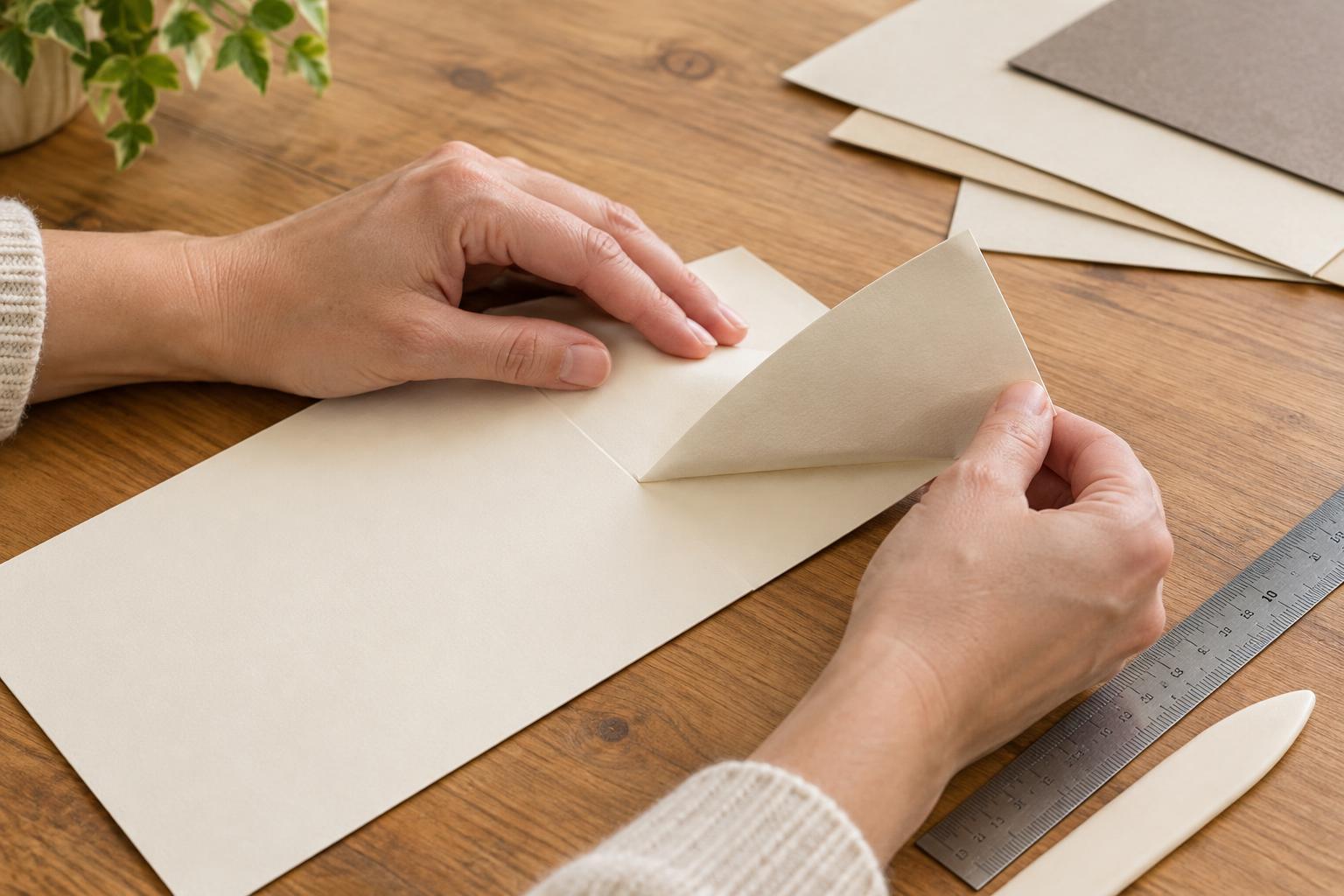
You need a flat work surface, a ruler, a scoring board or protective mat, and a blunt tool such as a bone folder or dedicated scoring stylus. Mark the fold position lightly, then hold the ruler firmly so it cannot slip. Run the tool along its edge in one steady pass. The aim is a continuous groove, not a cut.
Use moderate pressure and inspect the line before pressing harder. A narrow, sharp tool can tear the surface; excessive pressure can weaken the card enough to split when folded. On thick cardstock, two controlled passes may be easier to manage than one forceful pass. Keep the tool upright and avoid going back and forth over a section, which can leave an uneven fold.
Fold slowly and support the crease
Start with the scored groove on the outside of the intended fold and bend the card toward the raised side of the score. Bring the edges together gradually rather than snapping the sheet shut. Once they align, hold the fold in place and press along the crease with your fingers or the broad side of a bone folder. Move from one end to the other with even pressure.
Cardstocks do not all respond the same way, particularly when one side is coated or printed. Test the score direction on an offcut before committing to the finished piece. If the fold still cracks, try a lighter score, change the sheet’s orientation if possible, or choose a less rigid card. Do not repeatedly open and close a test fold when judging its initial appearance; repeated bending can create damage of its own.
Troubleshoot the result before finishing
A crooked fold usually begins with a shifting ruler or an uneven score. Secure the sheet, mark the fold at both ends, and check alignment before drawing the tool across. If the card splits along the groove, reduce your scoring pressure. If the fold bows or resists closing, check the grain direction and try a more flexible material.
Printed and coated cardstock deserves a separate test because its surface may crack even when the card beneath it folds neatly. A design with the fold on a lighter or unprinted area can make a remaining line less conspicuous. For a crisp finished project, test the exact combination of card, print, scoring tool, and fold direction you plan to use. A small trial piece is quicker to replace than a completed card or box panel.