Choose the fabric and plan the hem
A double-fold hem is a useful starting point for straight edges on woven fabric, such as a cotton napkin, curtain panel or simple skirt. The raw edge is folded under twice, then stitched in place. For a first attempt, choose a stable fabric that holds a crease when pressed. Slippery, bulky and stretchy fabrics can be hemmed too, but they may need different handling.
Decide where you want the finished edge to sit before cutting or sewing. Try on a garment, or lay a household project flat, and mark the intended finished length in several places. Then check that you have enough fabric beyond that line for the folds. For example, a hem with two 1 cm folds needs 2 cm of fabric below the finished edge. Mark a cutting line only after checking the measurement across the whole edge.
Prepare a straight, even fold
You will need a ruler or measuring tape, fabric marker or chalk, scissors, pins or sewing clips, an iron and thread that suits the fabric. For machine sewing, use a suitable needle and an all-purpose straight stitch for most stable woven fabrics. For hand sewing, choose a hand needle that passes through the fabric without leaving large holes.
Work on a flat surface. If the raw edge is uneven, trim it straight while preserving your planned hem allowance. Fold the raw edge toward the wrong side by 1 cm and press. Fold it over by another 1 cm and press again, checking the width at several points. Pin or clip the fold in place without stretching it. Pressing each fold before stitching makes it easier to keep the hem even; pins alone may not hold a crisp line.
If the edge has a slight curve, a narrower hem may lie flatter than a deep one. Check the fold before sewing: if it ripples or bunches, do not force it flat with extra pins. Adjust the fold width and press again.
Sew the hem by machine
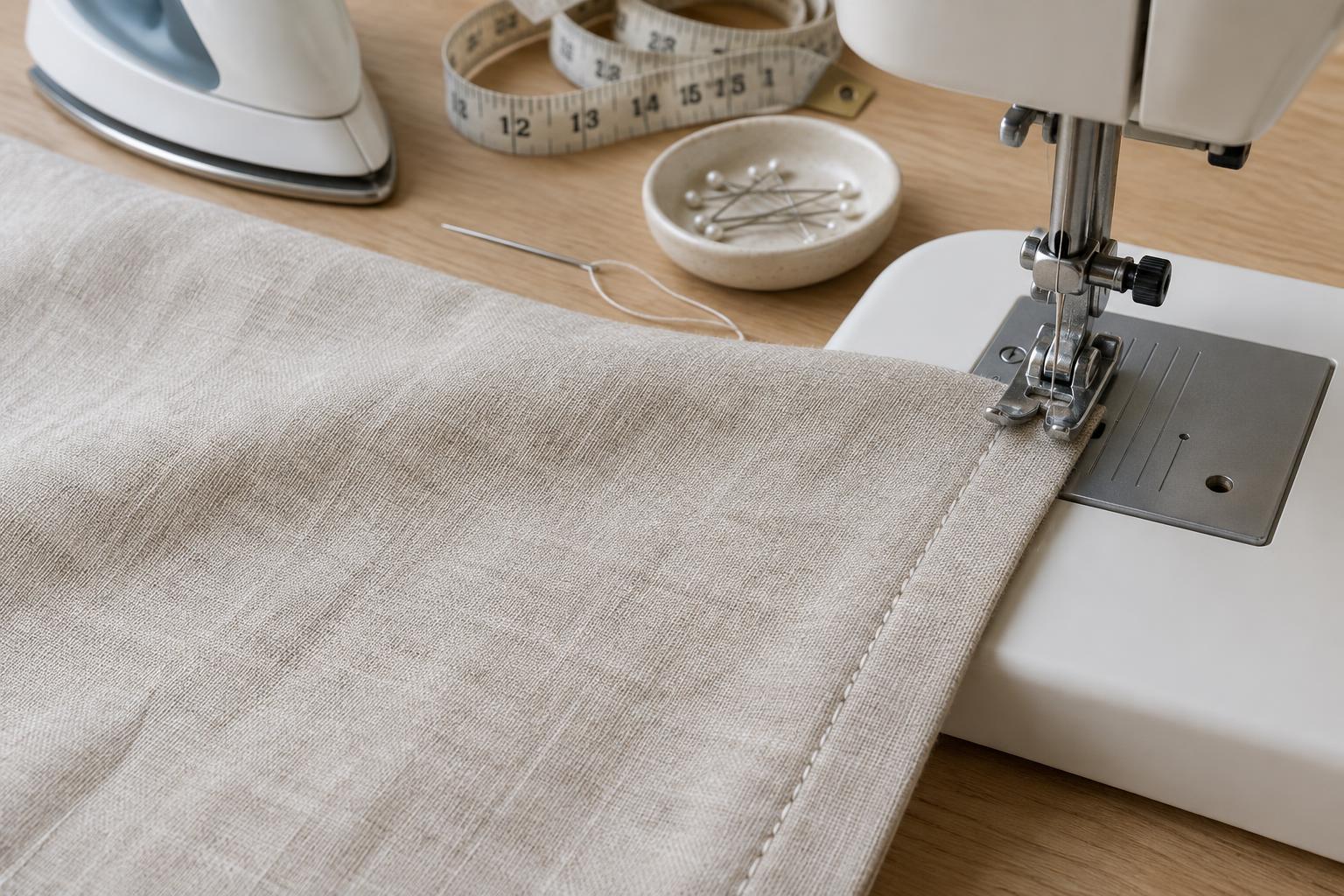
Test your stitch on a folded scrap of the same fabric, especially if the thread or needle is new to the project. Place the prepared hem under the presser foot with the wrong side facing up. Choose a point near the inner folded edge for your stitch line, and use a mark on the presser foot or needle plate as a guide. Sew slowly enough to keep the fold aligned; guide the fabric lightly rather than pulling it from behind.
At the start and end, sew a few stitches backward to secure the thread, or tie off the thread tails if backstitching would make a visible lump. Remove pins before they reach the needle. When finished, check the right side for an even line and press the hem. If the fabric puckers, test a fresh needle or a different stitch length on a scrap, and avoid stretching the edge as you sew.
Sew the hem by hand
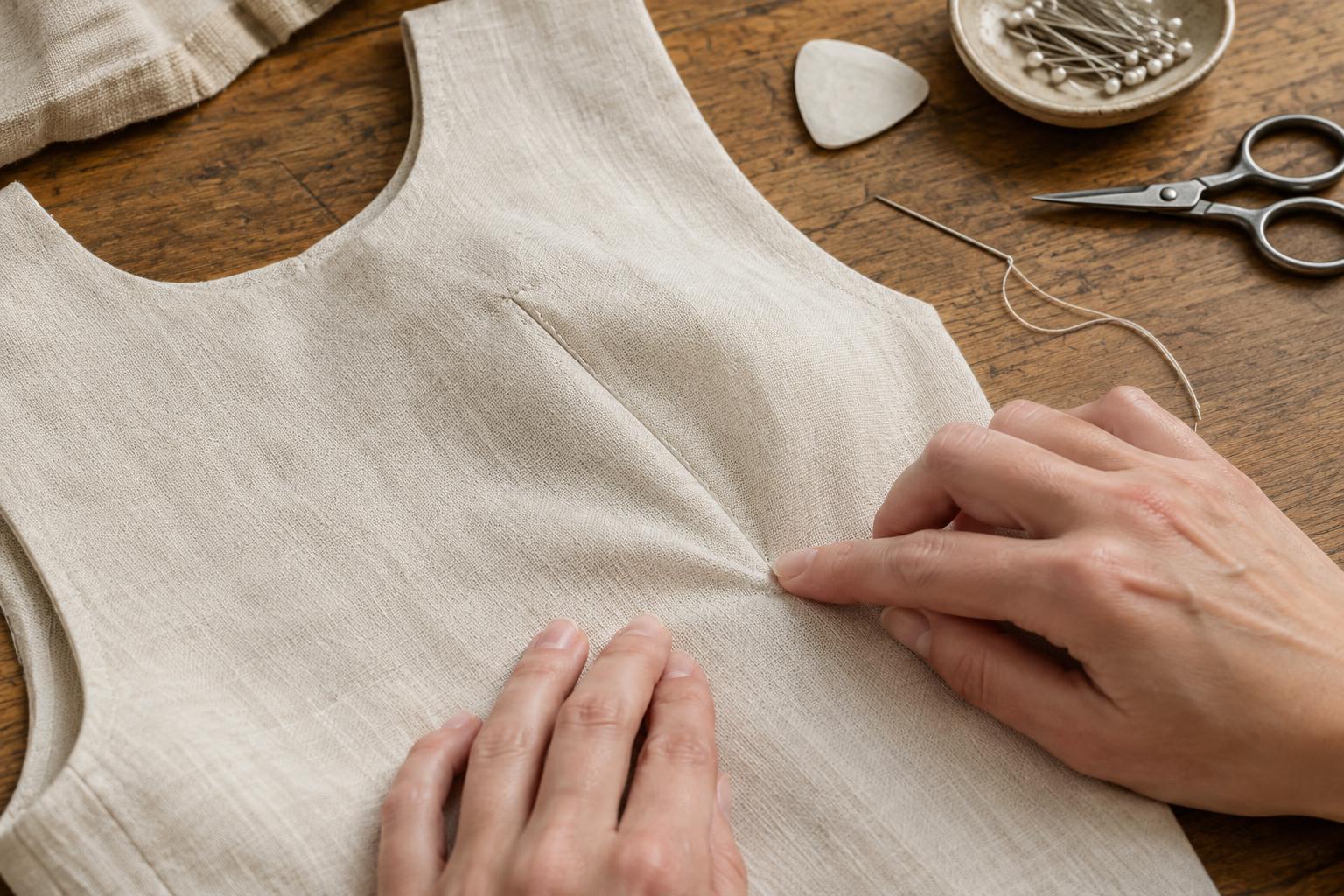
Thread a needle with a manageable length of thread and knot the end. To make a visible, sturdy line of stitching, work small running stitches near the inner folded edge, passing the needle up and down through all layers. Aim for an even distance from the fold rather than trying to sew quickly. Secure the thread at the end with a small knot on the wrong side.
For a less visible finish, try a slip-style hem stitch. Hide the starting knot inside the fold. Take a small stitch through the folded hem, then catch just one or two threads of the main fabric before returning to the fold. Repeat at regular intervals without pulling the thread tight. A small test area will show whether the stitches are discreet enough on the right side and strong enough to hold the hem.
Check the result and adapt when needed
Lay the project flat and compare the finished edge with your original marks. If one section looks uneven, remove just that section of stitching, repress the fold and sew it again. A hem that twists or waves often improves when the fold is measured consistently and the fabric is allowed to feed through the machine without tension.
This double-fold method works best where the fabric can turn under neatly without excessive bulk. Thick seams may need careful pressing, while stretchy knits often need a stitch that can stretch, such as a narrow zigzag, and a suitable needle. Whatever the project, a short practice hem on a scrap is the simplest way to check the fold, stitch and finished appearance before sewing the final edge.