Choose and prepare the canopy
A broken umbrella frame does not always mean the canopy is finished. Umbrella fabric is usually lightweight and sheds some water, making it useful for a pouch that may encounter splashes. It is not a substitute for a waterproof bag: wear, stitching and the opening can all let moisture through. Use the finished pouch for items such as a damp cloth or small travel supplies, rather than anything that must stay completely dry.
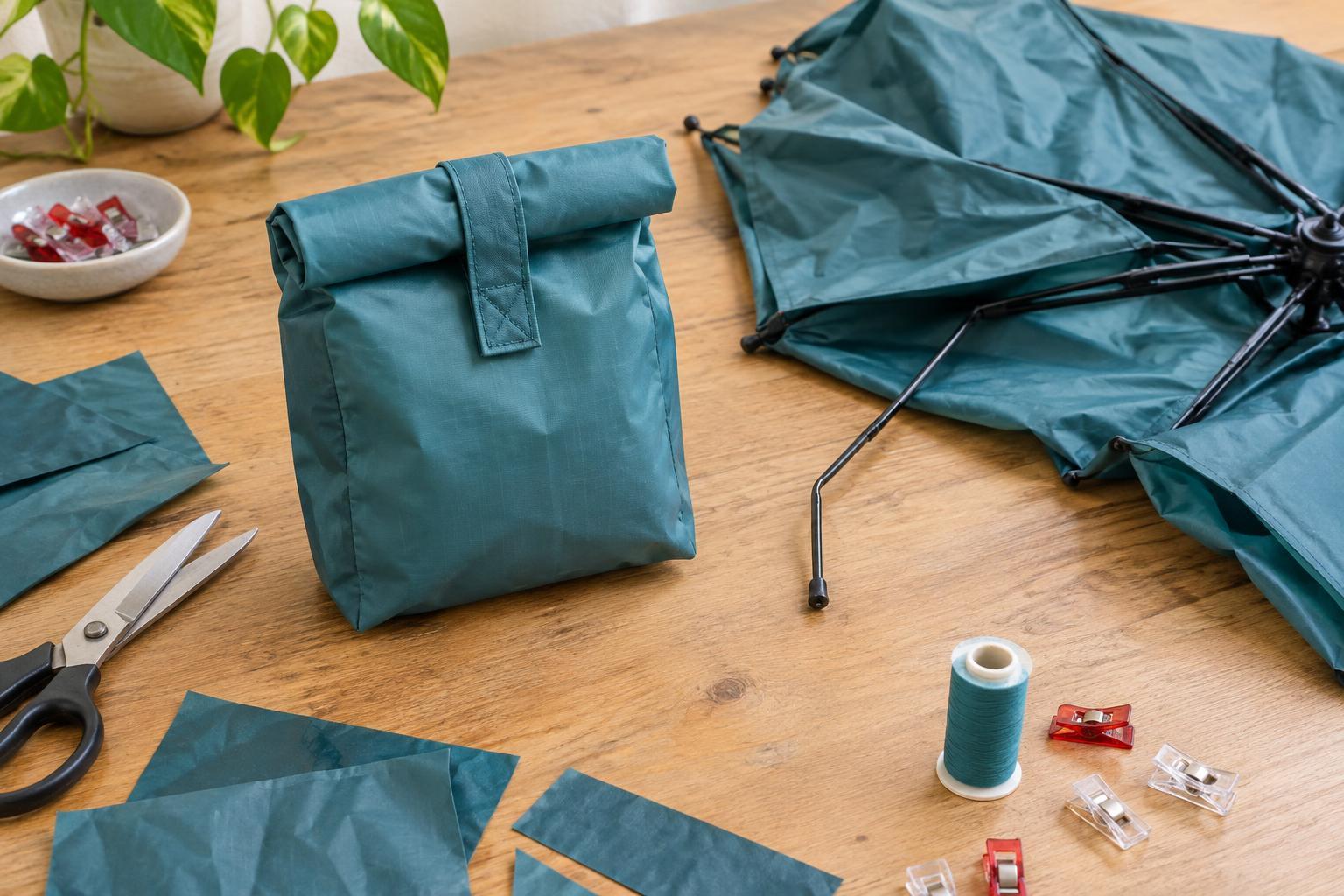
Carefully detach the canopy from the frame, watching for sharp wire ends. Remove loose threads and any stiff patches that would make sewing difficult. Choose a section without tears, worn coating or musty smells. Wash or wipe it according to how the fabric responds, then let it dry completely before cutting. If you are unsure how it will behave, test cleaning on a small offcut first.
Gather supplies and cut one panel
You will need the canopy, scissors, clips, a ruler, thread, a sewing machine or hand-sewing needle, and a narrow strip of spare fabric for a tie. A fine, sharp needle suited to lightweight woven fabric is a sensible starting point. Clips are preferable to pins because pinholes remain in the material. If the fabric slips, test your stitch length and thread tension on an offcut before sewing the pouch.
For a small pouch, cut a rectangle about 26 cm wide and 42 cm long from a sound part of the canopy. The long rectangle will fold in half to make the front and back, so it needs only two side seams. Position any existing canopy seams where they will not run across the bottom fold if possible. Those old stitch lines can be weak points for leaks. Save a long, narrow offcut for the closure tie.
Hem the opening and sew the sides
Lay the rectangle with its outer, water-shedding face down. At each short end, fold the raw edge toward you by about 1 cm, then fold it again by 1 cm. Clip and stitch the hems. These two finished edges will meet at the pouch opening. Sew slowly, keeping the fabric flat rather than pulling it through the machine; pulling can make light canopy fabric pucker. If sewing by hand, use small, even stitches.
Fold the rectangle in half crosswise with the outer faces together and the hemmed edges aligned. Sew each side with a 1 cm seam allowance, securing the beginning and end of each seam. Trim loose threads, then turn the pouch right side out and gently shape the bottom corners. The finished pouch will be roughly 24 cm wide and 19 cm tall before its top is rolled. If a side seam looks strained or uneven, correct it now rather than relying on the closure to hold the pouch together.
Make a simple roll-top closure
To close the pouch, press out excess air, bring the two hemmed edges together and roll them down toward the outside two or three times. A roll about 2 cm deep each time gives the opening a more sheltered path than a single fold. Use your saved offcut as a separate tie: fold its long raw edges inward, stitch along the length if needed, and make it long enough to wrap around the rolled pouch and knot securely. Because the tie is separate, you need not make extra needle holes in the pouch body.
A roll-top works best when the pouch is not packed to its full height. Leave enough empty space to make firm, even folds, and check that the tie cannot slide off easily. Umbrella fabric can be slippery, so try the closure with the pouch filled before deciding whether the tie needs to be longer or wider. If the canopy still has a usable fastening strap, you may be able to reuse it instead.
Check water resistance and care for the pouch
Place dry scrap paper or a tissue inside, close the pouch, and briefly splash its exterior with water. Dry the outside before opening it, then check the paper, side seams and rolled edge for dampness. This is a practical way to spot obvious leaks, not proof that the pouch will withstand rain for a long period or survive immersion. If water enters at a seam, a sealant intended for the fabric’s coating may help; test it on an offcut and follow its instructions. Heat-applied tape is not suitable for every umbrella fabric.
Let the pouch dry fully after use, especially if it has held damp items. Store it open rather than tightly rolled while wet. Avoid hot ironing unless you know the fabric can tolerate it, since heat may damage the coating. With careful cutting, tidy seams and a well-rolled opening, a discarded canopy can become a useful pouch while keeping its limitations clear.