Plan a stackable system, not a tower of jars
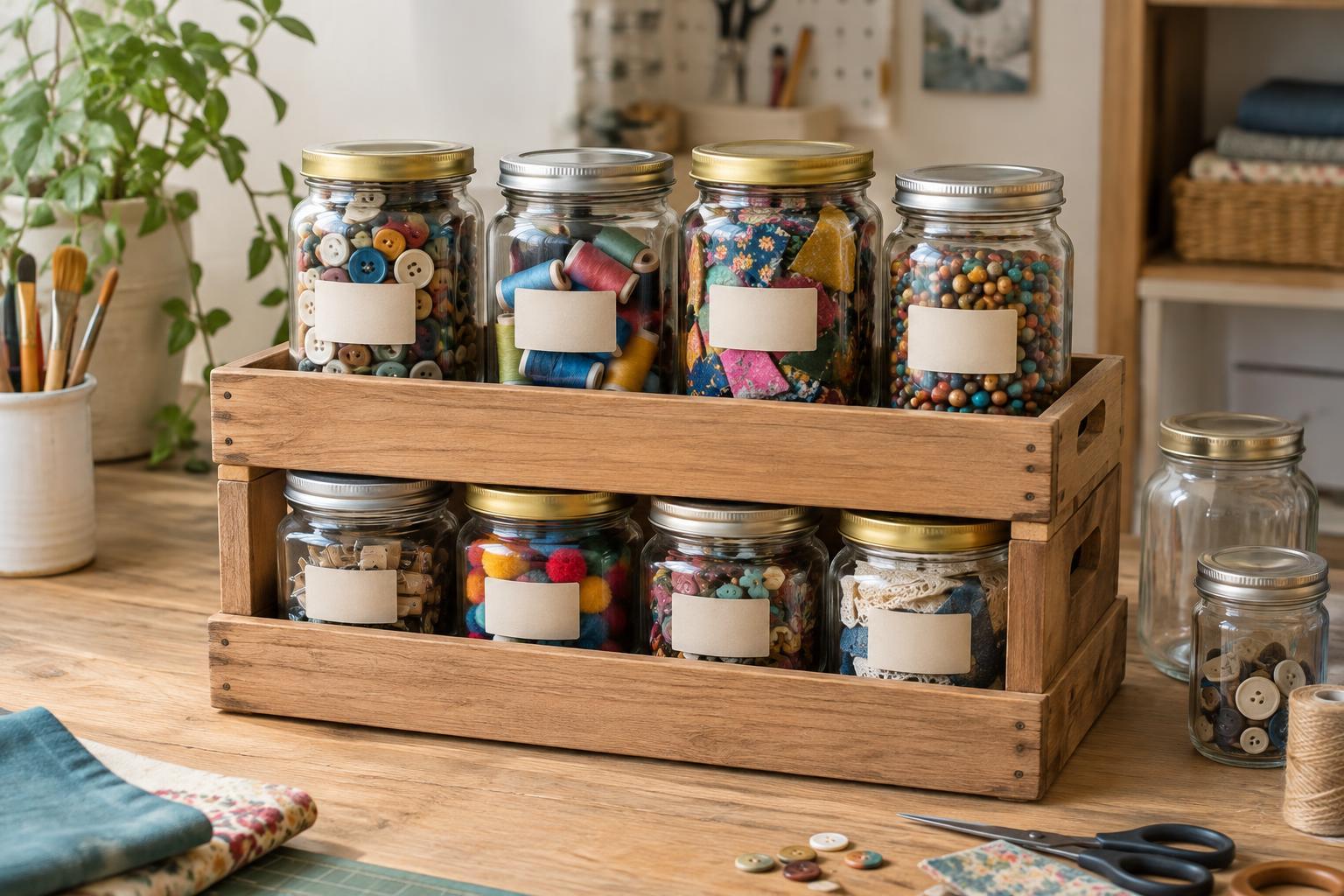
Glass jars are handy for storing buttons, beads, ribbon offcuts, clips, and other small craft supplies. They let you see what you have, and screw-top lids help keep loose pieces contained. The safest way to make them stackable is to place the jars upright in sturdy, stackable trays or crates. The trays carry the weight of each layer; the jars do not rest on one another.
Start by measuring the shelf or cupboard where the storage will live. Choose trays with flat bases, firm sides, and a secure way to sit on top of one another. Check that a filled jar fits below the upper tray with room to grasp its lid. If the trays are open-sided, choose jars that sit well below the rim or use dividers to help prevent tipping. Keep the stack low enough that you can lift down a tray comfortably.
Choose jars and prepare them
Collect jars with broad, flat bases and lids that close properly. Similar-sized jars make rows easier to arrange, but a mix can work if you group jars by height. Avoid chipped rims, cracks, badly rusted lids, and narrow jars that wobble easily. Small jars suit beads and fasteners; wider openings make it easier to reach fabric scraps, corks, or bulky embellishments.
Remove labels with warm, soapy water, then wash jars and lids thoroughly. A little cooking oil can help loosen stubborn label residue; wash it off afterward so labels and decorations will stick. Dry every part completely before adding supplies, especially anything made of paper, fabric, or metal. Test each lid after cleaning: it should turn smoothly and stay attached when you pick up the jar.
Before filling the jars, sort supplies into useful categories. Keeping similar items together makes them easier to find than sorting only by color or jar size. Leave a little empty space in each jar so you can remove its contents without spilling them. Reserve the heaviest jars for the bottom tray.
Fit jars into trays or crates
Set the empty jars in a tray to test your layout. Arrange them in rows with enough space for your fingers to lift one out without knocking its neighbors. If jars slide, line the tray with a washable nonslip mat cut to fit its base. Cardboard dividers can help separate jars, but they should not be relied on to support the weight of an upper tray.
Add the next empty tray and check its contact points. Its weight should rest on the lower tray’s edges or stacking supports, not on jar lids. The trays should sit level without rocking. If they do not, try a different tray size or shorter jars rather than forcing the fit. Once the layout works, fill the jars and test the setup again on a level surface. Lift upper trays off one at a time when you need jars below; avoid pulling a lower tray out from under a stack.
Label for quick access
A label on each lid is useful when you look down into a tray. Add a second label to the side if the jars are visible on a shelf. Simple names such as “small buttons” or “paper clips” are easier to scan than broad labels such as “miscellaneous.” If you often rearrange supplies, use removable labels or place a paper label under a clear lid where it will stay dry and readable.
Keep decoration practical. Paint or wrapped twine can make jars look cohesive, but leave enough clear glass to see the contents. Avoid thick decorations around the base, lid, or rim: they can make jars unstable or harder to open. If children use the supplies, place fragile jars and small loose items where they can be handled with appropriate supervision.
Keep the storage useful over time
Place the stack on a stable shelf away from edges and busy walkways. Keep heavy materials low, and do not stack trays higher than their design or your space comfortably allows. When a jar becomes too full or a category grows, add another jar rather than packing it tightly. Review the labels as your projects change so the system remains easy to use.
Glass jars work especially well when you can remove and replace them without disturbing everything nearby. If a tray bends, a jar rocks, or an upper layer presses on lids, adjust the layout before using it. A modest, stable stack that gives every jar its own place is more useful than a tall one that is awkward to reach.