Gather materials and plan your basket
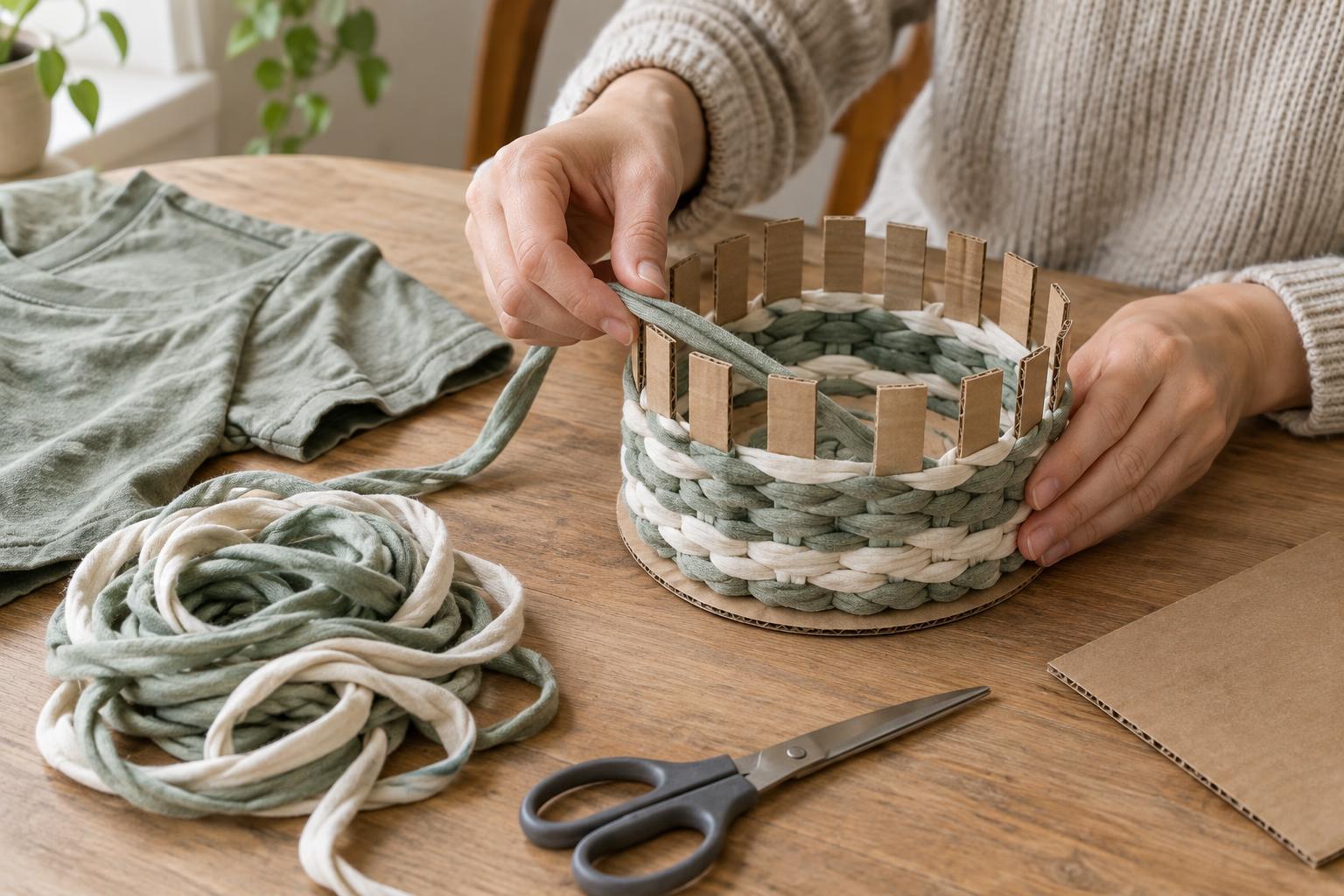
A T-shirt yarn basket is a useful way to reuse a worn cotton jersey shirt, especially one with a stain or faded print. This version uses cardboard tabs as the upright parts of the loom. You weave around those tabs, and the cardboard stays inside the finished basket to support its shape. The result is best suited to lightweight items such as sewing clips, hair ties or spare craft supplies.
You will need a clean T-shirt, sturdy cardboard, sharp scissors, a ruler, a pencil and a plate or similar round object to trace. A blunt tapestry needle can help tuck in yarn ends. Keep glue or tape nearby for securing the first and last ends, but do not rely on it to hold the woven sides together. Because the cardboard is part of the basket, choose a piece without deep creases and plan to keep the finished basket dry.
Make yarn from an old T-shirt
Lay the shirt flat and cut off the bottom hem. Cut across the body to make strips about 2 to 3 cm wide, stopping before you reach the sleeves. Remove bulky side seams where possible, then join shorter strips as you need them. A small, secure knot is simple for a first project; keep knots short so they can be tucked out of sight inside the basket.
Pull each strip gently along its length. Jersey fabric usually curls inward, creating a softer, rounder strand. Do not stretch so hard that the fabric becomes thin or uneven. Wind the yarn loosely into a ball. Having several lengths ready before you begin makes it easier to maintain a steady weaving rhythm.
Cut and fold the cardboard loom
Trace and cut a circle about 17 cm across. Mark 13 evenly spaced points around its edge. The spacing does not have to be exact, but noticeably different tab widths can make the basket look lopsided. At each mark, cut a narrow notch about 3.5 cm toward the centre. Remove a thin sliver of cardboard from each notch so adjacent tabs have a little room between them. Leave the central circle intact: it will form the basket’s base.
Gently fold all 13 tabs upward where the cuts end. Run a ruler along each fold first if the cardboard is difficult to bend neatly. The tabs should stand around the base like a short wall. An odd number matters here: when you continue weaving around the circle, the over-under pattern shifts naturally on the next pass. Check for sharp or ragged edges and trim them before handling the loom further.
Weave the sides with even tension
Secure one yarn end against the inside of a tab near the base with a small piece of tape, leaving a short tail to tuck under the weaving later. Guide the working yarn in front of the first tab, behind the next, then in front of the next. Continue alternating around the basket. As you reach your starting point, keep following the same over-under sequence rather than restarting it. With 13 tabs, each new round will sit opposite the round below it.
After every circuit, gently push the yarn down toward the base. Aim for rows that touch without being crushed together. Pulling too tightly can bend the tabs inward and narrow the basket; weaving too loosely leaves gaps and makes the sides less stable. If the shape starts to lean, pause and straighten the tabs before adding another round. When a yarn length runs out, tuck its tail beneath a few woven crossings on the inside and begin a new length nearby. Avoid placing several bulky joins in one spot.
Finish the rim and use your basket
Stop weaving just below the tops of the tabs, leaving enough space to cover the exposed cardboard. Wrap a fresh length of yarn along the rim, passing it through the gaps between tabs and around their top edges. Make a second pass if needed to conceal the cardboard and hold the upper rows in place. Tuck the final end beneath several crossings inside the basket; add a small dab of craft glue only if an end will not stay put.
Check that the base sits flat and that no tabs protrude through the rim. A circle of leftover fabric can be glued inside the base for a tidier finish, though it is optional. If your first basket has uneven rows, try a slightly wider yarn strip next time or spend longer adjusting each round before moving upward. Keep the basket away from water, and use it for dry, lightweight objects rather than heavy or fragile contents.