Start with how the fabric is made
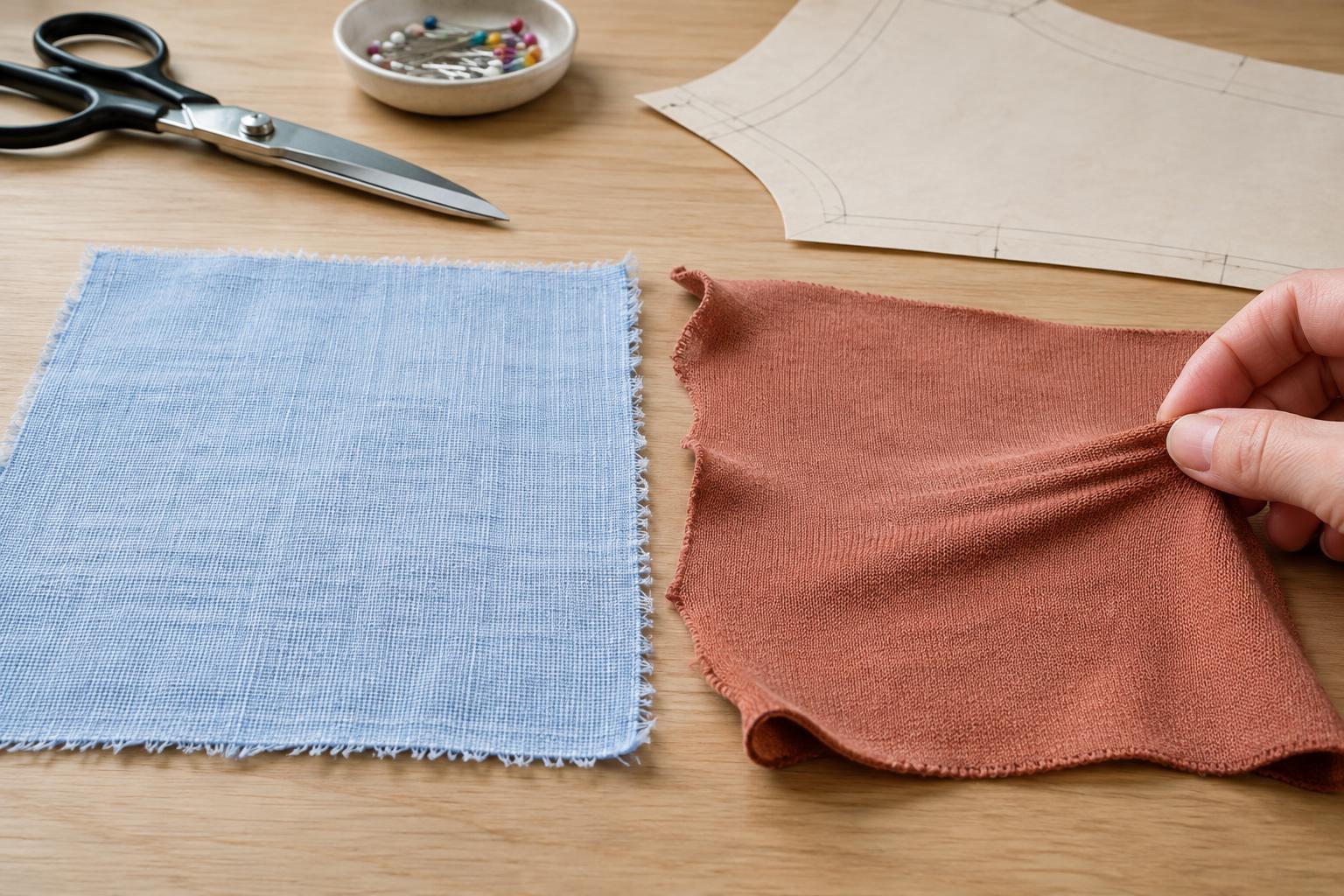
Woven fabric is made from threads crossing over and under one another. Cotton poplin and quilting cotton are familiar examples. Most woven fabrics have little stretch along their length and width, though they can stretch diagonally, on the bias. Knit fabric is made from interlocking loops, like a T-shirt. Those loops allow it to stretch, often across its width and sometimes in both directions.
For a quick check, gently pull a fabric sample in two directions. If it gives and returns to shape, it may be a knit or a stretch woven. Look closely as well: a knit often shows tiny rows of loops, while a woven shows crossing threads. Stretch alone is not a reliable label, because some woven fabrics contain elastic fibers.
The distinction matters because a pattern is designed for a particular amount of give. A loose woven top needs enough room to move without stretching. A fitted knit top may rely on the fabric’s stretch for comfort. Choosing the wrong type can make a garment difficult to put on or leave it hanging differently than intended.
Match the fabric to your first project
If you are learning to cut, pin, and sew straight seams, start with a stable, medium-weight woven cotton. It stays relatively flat on the table and is well suited to a simple tote bag, cushion cover, or elastic-waist skirt. For a bag, check whether the pattern calls for lining or interfacing to give the finished piece more structure.
Knit fabric is a good choice when you want a soft garment that moves with you, such as a basic T-shirt or simple lounge trousers. For a first knit project, look for a stable jersey or interlock that does not curl or slide excessively when handled. Very thin, slippery, or highly stretchy knits can be harder to cut evenly and feed through a sewing machine.
Read the pattern’s fabric recommendations before buying. Check not just whether it says “woven” or “knit,” but also the suggested weight, drape, and stretch. A stiff woven cotton and a fluid woven rayon can produce very different results from the same pattern. If a knit pattern specifies a stretch percentage, test your fabric against that requirement rather than relying on how stretchy it feels.
Prepare and cut with the fabric in mind
Wash and dry the fabric as you expect to care for the finished item, unless its care instructions say otherwise. This helps you discover shrinkage before cutting. Press woven fabric to remove creases. For knits, press gently without dragging the iron, which can distort the loops. Let either fabric lie flat before laying out the pattern.
Follow the pattern’s grainline markings. On a woven, the grainline usually runs parallel to the selvage, the finished edge of the fabric. On a knit, the direction of greatest stretch usually needs to run around the body, but follow the pattern’s instructions rather than assuming. Keep the fabric relaxed while cutting: pulling a knit taut can change the shape of the pieces when you release it.
Use sharp scissors or a rotary cutter, and support the fabric so it does not hang off the table. Mark notches and other pattern details carefully. Small cutting errors can become noticeable when you try to align seams, especially on a project with matching edges.
Use stitches that suit the fabric
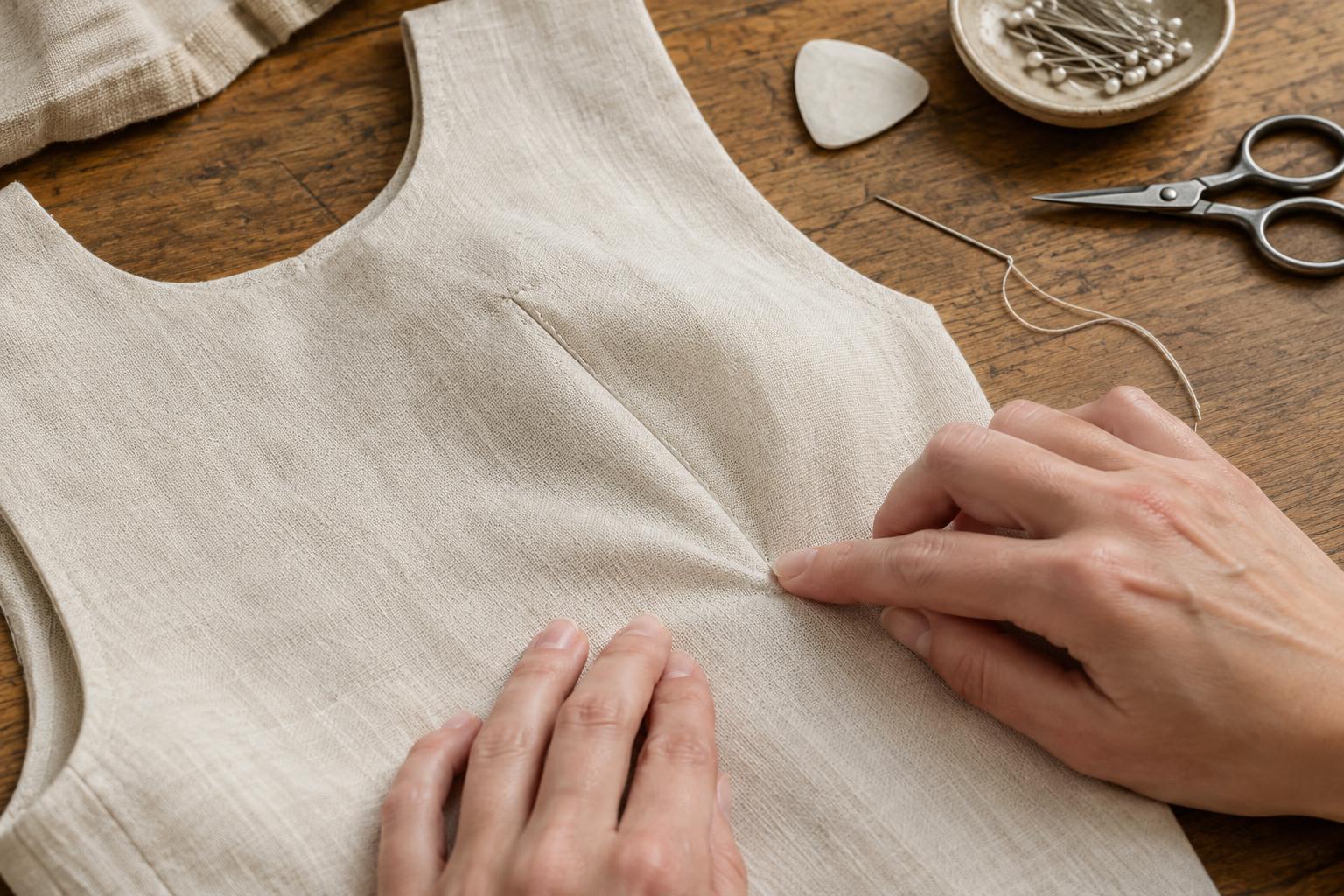
A straight stitch usually works for seams in a stable woven. Test the stitch on a scrap first, then check that the seam lies flat without puckering. Many woven fabrics can fray at cut edges, so finish exposed seam allowances with a zigzag stitch, pinking shears, or another method your pattern suggests.
A knit seam needs to stretch without the thread snapping. A narrow zigzag stitch or a machine’s stretch stitch is often suitable; test it on a scrap and gently stretch the sample afterward. A ballpoint or stretch needle may help the needle pass between knit loops without damaging them. If your machine has adjustable pressure or a walking foot, those options may help when layers feed unevenly, but they are not essential for every knit project.
Avoid pulling fabric through the machine, particularly knits. Guide it lightly and let the feed dogs move it forward. If a seam ripples, try a fresh needle and adjust your technique on scraps before sewing the project pieces.
Choose the easier learning step, not the “better” fabric
Neither woven nor knit fabric is always easier. A stable woven makes it simpler to practice accurate cutting and straight seams, while a stable knit can be forgiving in fit but requires a seam that stretches. Pick a pattern written for the fabric you want to use, then make a small test seam before committing to the project.
Keep your first attempt manageable: one familiar fabric, a pattern with few pieces, and time to check each step. Once you know how the material behaves under your scissors and machine, you can try softer wovens, stretch wovens, or more fluid knits with greater confidence.